Sometimes there is a moment when you are lucky to be there at the very beginning. Not for yourself, of course, but for someone else. Someone whose talents shine like the Sun on a bright summer’s morning. Waking you up to the promise of a brand new day. Or, maybe like being in a sweaty basement as The Beatles tune their guitars or there in LA as Kenneth Anger projects his first home movies against a bed sheet hung across a wall. Who knew where all this would lead?
Yes, sometimes we are blessed like this. Recently, I became acquainted by happenstance with a young, highly talented woman who made her first award-winning film at eighteen. Her name is Mia Alexandra. She was named Mia after Mia Wallace as in Pulp Fiction. Or, maybe, perhaps, Mia as in Farrow, an actress who cut her own path.
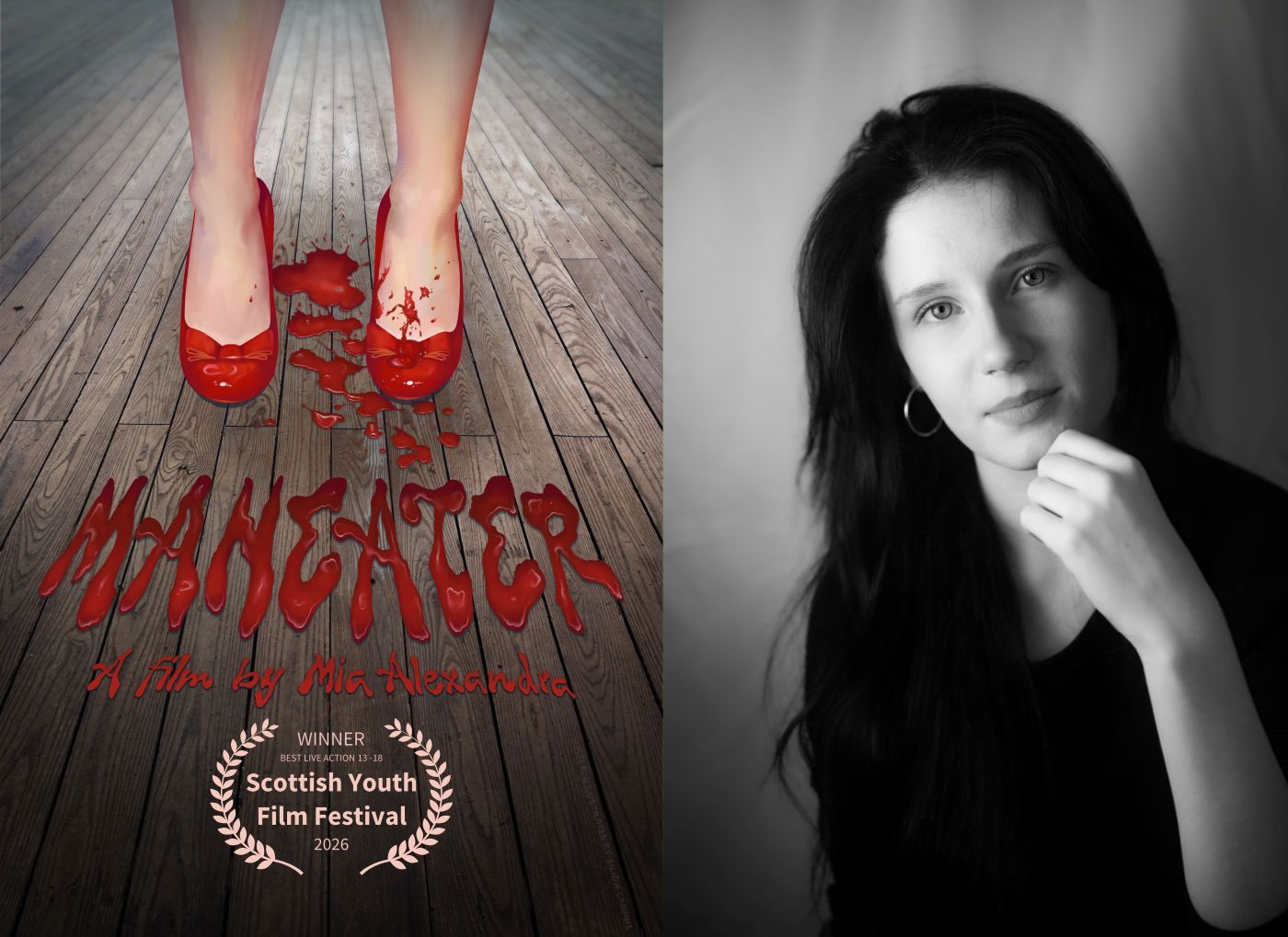
Mia Alexandra is eighteen years old. She has written, directed, produced, edited, and appeared in her first award-winning (glad to hear I am not the only one who thinks she is talented) short film called Maneater. Partly inspired by a song by Hall & Oates. Mostly inspired by the goddam awful representation of women in films as either victims, or mothers, or whores.
For someone as young, Mia Alexandra is smarter than most modern day Netflix directors and twice if not three times wise beyond her age.
Mia is a queer feminist filmmaker, who was born in Edinburgh to a Scottish/Irish family. An actor, filmmaker, photographer, writer, and producer. Someone who has always been interested in the Arts from an early age. If only we could al be as good. All of which is to our benefit.
Alexandra’s first film Maneater is a powerful, original cinematic work which challenges traditional, sexist tropes with wit and horror. The horror being how most women deal with life.
Planet Paul was fortunate to catch up with Mia Alexandra and asked:
What began your interest in filmmaking?
Mia Alexandra: I had quite the creative childhood; I have very film obsessed parents which rubbed off on me, they named me after Mia Wallace from Pulp Fiction so it was inevitable. They made it a priority to teach me about film and music of their time. Thankfully they let me explore my creativity as much as possible when I was wee, letting me cover myself in paint and write poetry on the walls. I joined an animation club at The Space in Dalry when I was about eight, where I grew up. That’s where I was introduced to the behind the scenes of filmmaking and I realised I could make films too. Then of course like most Gen-Z children I started making “iMovie’s” with my younger brother on the grotty family iPad, not sure if it was much fun for him as I managed to turn the living-room into a dictatorship. Since then, I’ve always been making my own things.
What directors/filmmakers/writers do you like/admire? How have they influenced you?
MA: Growing up I was all over Tim Burton and Wes Anderson. I was so in awe of their stories and aesthetics. Tim Burton makes films for the “misunderstood outsiders”, which I always found comfort in especially as I found school and growing up neurodiverse difficult. He taught me to embrace the strange, and that’s something that has really influenced my filmmaking, to be vulnerable and don’t adapt your ideas to what the mainstream expects. Wes taught me about the artistry of cinema; his characters have so much depth which I always try and make a priority when writing. Nowadays, I feel that I’m a very easy person to inspire so I could list names forever, filmmakers/writers such as Danny Boyle, Jordan Peele, Ryan Coogler, Pheobe-Waller Bridge and David Lynch have become such inspirations to me. Especially David, he was an incredible human being. I adore how he views cinema and implements abstractions in his films to reflect life.
How did you make ‘Maneater’?
MA: I knew I was going to be taking on a lot of roles independently; I still have so much to learn but it all started with years’ worth of pent-up rage about being a woman. I was jamming out to Maneater by Darly Hall and John Oates, I saw a glimpse of the film in my head. That’s normally how ideas come to me, like flipping through TV channels. I started to write down every idea I had, let myself daydream and started to meticulously plan every department. I sat down with actors and talked them through the entire plan and script, so everyone was on the same page. Before I start shooting, I always make sure the cast and crew know why we’re making the film, and I like to have an open conversation to how they might relate to the subject matter. Not only does that bring people closer but it heightens the determination to make the film and tell a great story.
Was this part of your course work at school? Can you tell me about this?
MA: Yes, it was. I took media in school. For the coursework, you had to create a short under three minutes, analyse other films including your own film. I will say that it’s great that it got you thinking in the right way of “how can I implement genre or what narrative/ visual codes can I use such as juxtaposition” it’s important to think about these things. But I knew it was still schoolwork and I had to do it which meant my brain viewed it as labour at times. But I used it as an excuse to make a film I wanted to make. It became the only piece of ‘schoolwork’ I was fully invested in.
Tell me about the film and your idea and intentions in making it?
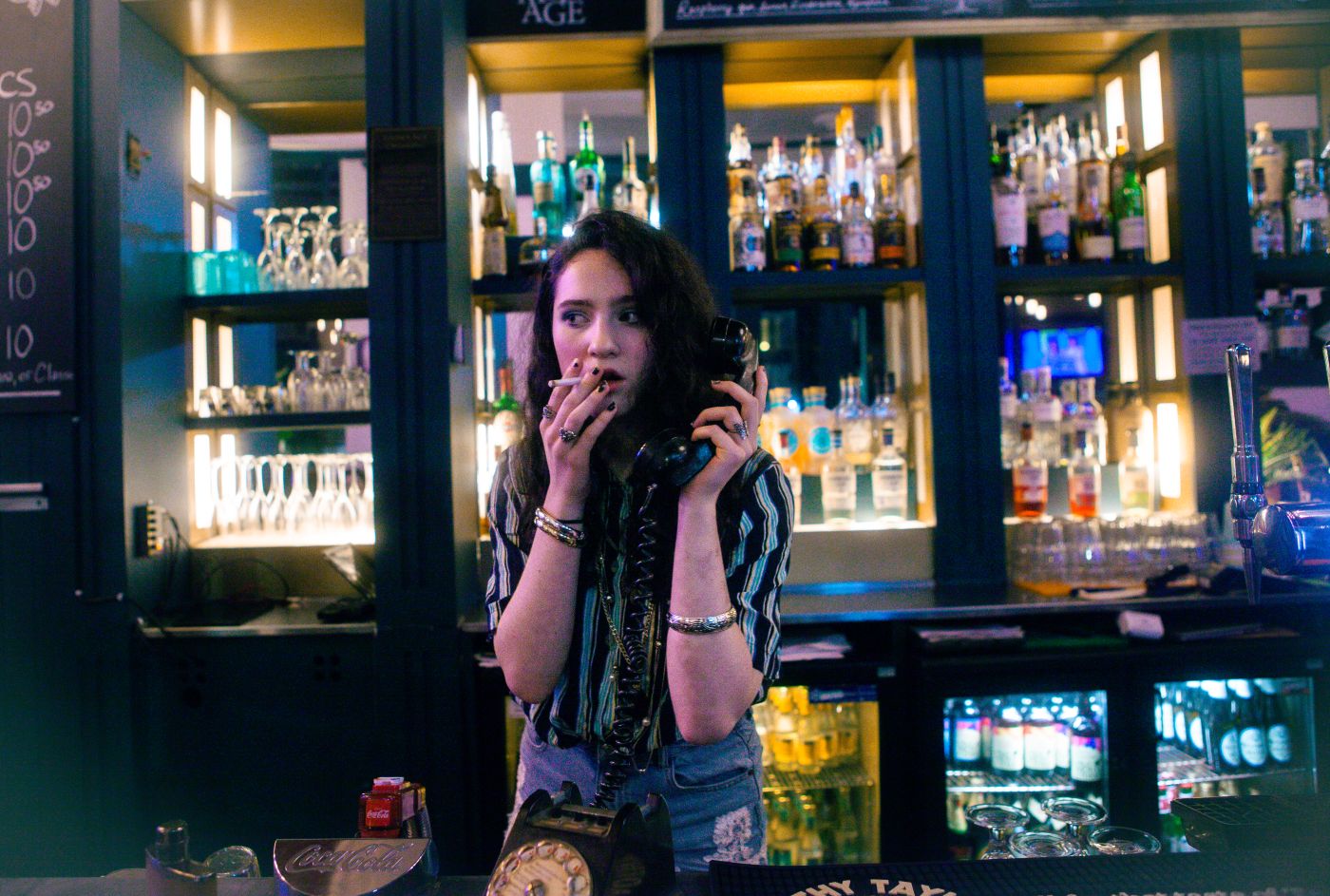
MA: The film follows housewife ‘Shelly’ seeking revenge on her cheating husband. I won’t spoil it but let’s just say she doesn’t just shrug it off. This film is my personified rage as a woman; we’ve seen this story a million times but not always the revenge story. For years I’ve been so fed up with how women are portrayed in film, it’s so distracting especially trying to watch a “classic” film and the female characters are just awfully written. Particularly a women’s rage seems to be non-existent, an emotion unexplored and that’s not how I see it in life. This film is for anyone who’s felt impacted by the patriarchy.
Was it difficult writing, directing, producing, and editing your film?
MA: Very. But I would do it again, and I would recommend it to any independent filmmakers. It’s like giving birth as a single mother, the film becomes your child, and you take full ownership for the film, and you can choose what input goes in and what comes out. It was honestly so rewarding creatively because you have full control and don’t have to explain yourself. Obviously, it’s exhausting, feels lonely, especially as filmmaking is a collaborative art, but I would recommend it to anyone who wants to start. It’s also a great way to figure out what departments you enjoy the most.
How do you approach filmmaking?
MA: The music and the personal connections come first. I make films because I want to tell a story and that stems from something personal, or something I want to teach the audience about and shed light on. I find myself developing my ideas further when I find the right soundtrack, that can be difficult of course due to copyright but finding inspiration through music is vital. After hours of daydreaming, I start to jot down every single idea I have, build scenes and build a script, as many drafts as possible. I really like to live with the characters and plot for as long as possible. I then craft storyboards for every scene, this is incredibly important, potentially tedious but it’s one step closer to watching your vision come to life.
What has the response been to your film?
MA: The response has been incredible, something I never would’ve thought possible. Obviously not everyone is attuned to the idea of the patriarchy, or they live in denial of it. The film has a bit of gore/violence in it which isn’t everyone’s cup of tea. It was first shown during my school’s media showcase, it was really amazing to hear such an active audience. The audience of parents and teens found it quite funny, this was relatively confusing to me at the time as it was made with the intention of showcasing real life issues, not all of it was intentionally humorous. During the Scottish Youth Film Festival screening, as the credits rolled and applause filled the room someone behind me shouted “Oh, wow!” I started tearing up on the spot, even thinking about it now makes me feel so emotional. That to me was worth more than any win or nomination.
You won an award recently, can you tell me about it and what happened?
MA: Yes, I won Best Live Action 13-18 Award. I had heard of SYFF via school and knew I wanted to submit a film to them someday. I had made Maneater which I knew I wanted to be more than just a school project, so I thought “aye why not it’s for the craic.” Et voila! I was invited to their festival, I met so many amazing individuals, including fully established filmmakers, company owners and other young people chasing their dreams. I’m still in shock that I managed to win something. I was up against funded films, so I had already come to terms with potential disappointment. My imposter syndrome kicked in of course, but deep down I was immensely proud as not only was it a win for me but for women in film.
You also act, can you tell me about that and what you’re working on?
MA: I found acting/ performing similarly to filmmaking, I was completely in awe of actors. In primary three, my legendary teacher decided the class should put on a musical, he directed it himself. I remember being backstage thinking “yeah I could get used to this”. It stuck ever since, I found “the spark”. I kept going with musical theatre, I then joined “Edinburgh Acting School” as I wanted to take acting seriously. It really solidified that’s what my heart wanted. I wanted to perform so badly, but I lacked so much self-belief when I was younger. I was so fortunate to work with some incredible teachers there, I was so in awe of them. I remember ranting to the teacher about how I didn’t know if this was possible and he said, “Mia you’re going to make it”, I didn’t know exactly what he meant but it lit a fire of determination in me. I’ve recently been involved in some Screen Academy Scotland films; every experience has been incredible. I’ve gotten the opportunity to work with some incredible talent, and I know they will go far. Soon I’ll be performing in Glasgow for an independent play and will be in Glasgow again for a short film!
What are you working on next?
MA: I’ve been asking myself the same question. I have a religious horror to continue making. I think I was about sixteen when I wrote it. I really want to make something that’s not on a time crunch and is something that I can be really proud of. I’ve been writing a longer version of Maneater, I would love to create a version that’s more ambitious and with an adult cast… I don’t feel like it’s over yet.
*****
Mia Alexandra’s film will be on streamed soon.
All images used by kind permission.
With thanks to Mia Alexandra.
If you like what I do, then please consider buying me a coffee.
Previously on Planet Paul
Music, Sitcoms and a ‘Life in Progress’: An Extract from the One-Man Show by Micheál Jacob
‘A jigsaw with no picture’: An exclusive interview with film editor Angela Slaven


Leave a Reply