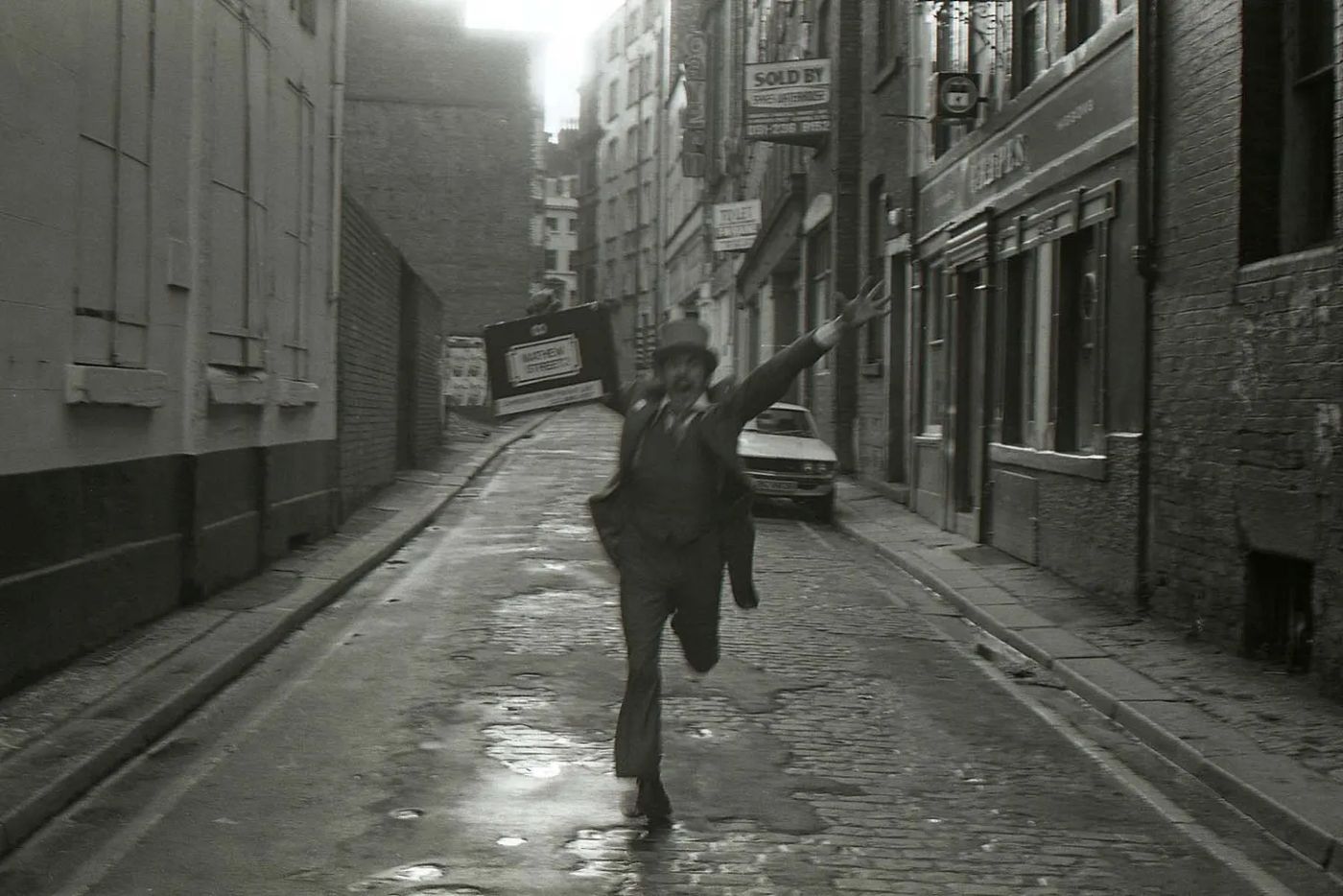
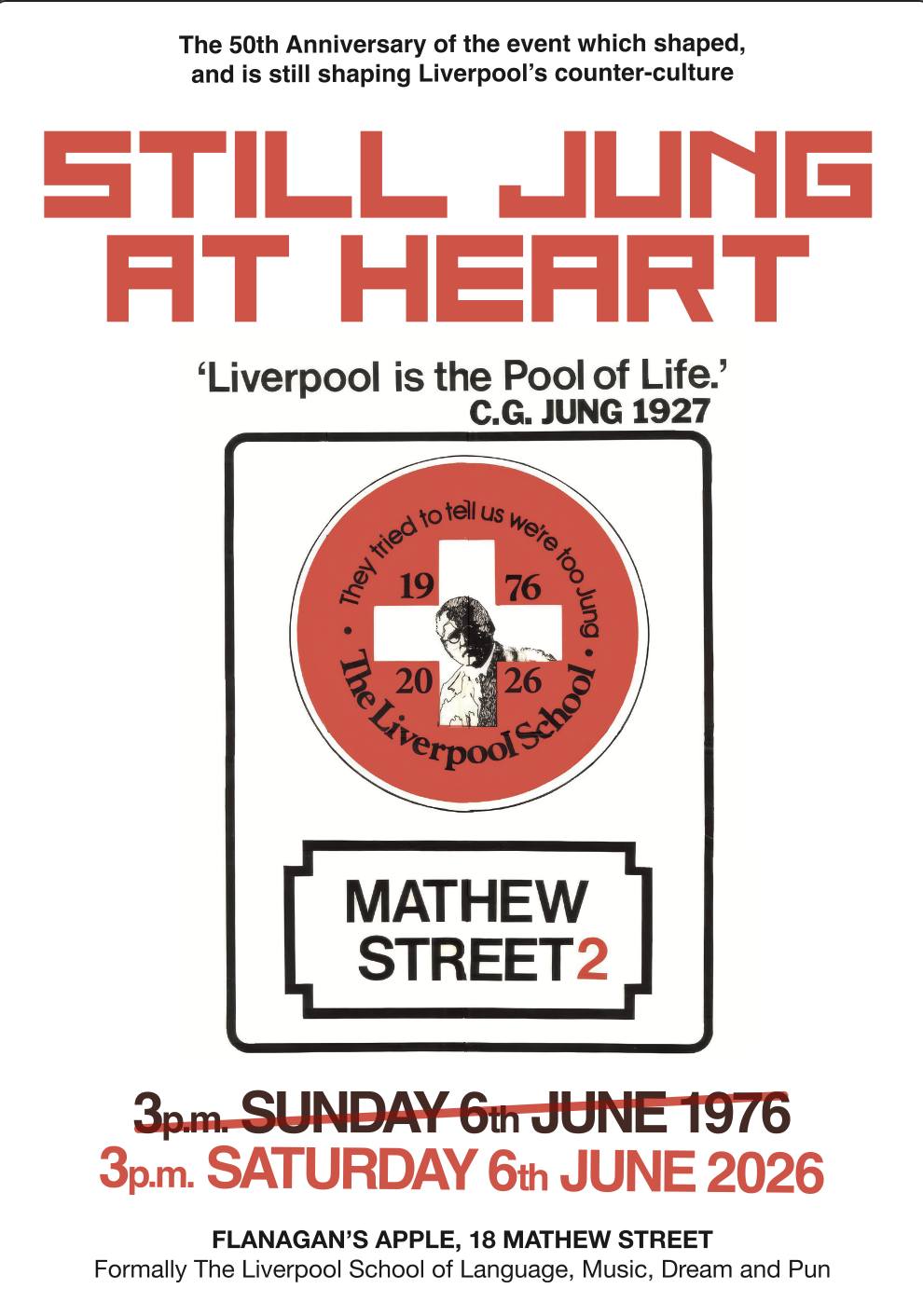
A guest blog from writer, director, filmmaker and all round good guy Grant McPhee on ‘Still Jung at Heart’ an event this Saturday 6th June celebrating the 50th anniversary of the Jung Festival in Liverpool which unleashed a creative shift in the city arts and music scene.
On Sunday the 6th of June 1976, a cultural event took place on the then dilapidated and largely forgotten Mathew Street, one that has almost disappeared from Liverpool’s collective memory. Yet its impact on the city would prove every bit as significant as The Beatles’ time in that same back-alley.
It was the First Jung Festival, and it was held at The Liverpool School of Language, Music, Dream and Pun, a former fruit warehouse that had become a DIY arts hub. Over the previous two years, the building had evolved into a meeting place for Liverpool’s bohemian underground, attracting artists, musicians, writers, performers and young outsiders searching for something beyond the city’s prevailing sense of decline.
At the time, the original Cavern, a few doors down, had already been bulldozed, and its replacement was itself also in terminal decline, while Eric’s, the venue that would soon become synonymous with Liverpool’s post-punk explosion, was still months away from opening. Liverpool was suffering economically and culturally yet on this street, most associated with the city’s past triumphs, something entirely new was about to emerge that would birth something entirely different and entirely strange.
The driving force behind the building and festival was Peter O’Halligan, whose belief was that Liverpool could be revitalised through culture, music and the rebirth of Mathew Street itself. That vision found an unlikely focal point in the work of Swiss psychologist Carl Gustav Jung and a festival to celebrate a 1927 dream he had of the city, one which he described Liverpool as The Pool of Life.
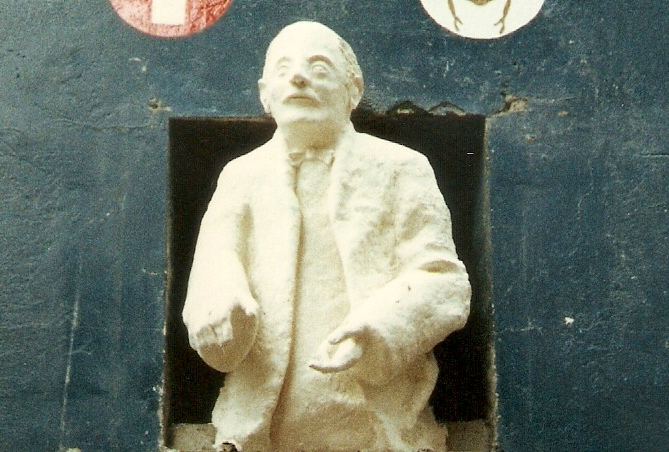
The centre-piece of the festival would not just include music but the unveiling of a Jung bust and a ‘Pool of Life’ inscribed stone, which had recently been brought back by ‘The School’ from Jung’s home in Switzerland; while Jung’s grandson Marc Baumann also travelled to attend.
Fifty years later the whole thing can sound wonderfully eccentric. A group of artists, dreamers, musicians and outsiders gathering in a former fruit warehouse on a decaying Liverpool street to celebrate a Swiss psychoanalyst is not the obvious starting point for a cultural revolution.
Yet beneath the apparent absurdity was a serious proposition. O’Halligan and those around him believed the city had lost confidence in itself and could rediscover its identity through creativity, imagination, music and collective action. The Jung Festival was a statement of intent, grounded in synchronicity, Jung’s belief that sometimes coincidences carried a deeper meaning. This was done with a veneer of humour and surrealism on the surface, but it was merely an entry point, allowing something that was identifiable to many to offer a route for something deeper, profound and mysterious to enter through the subconscious. It was punk-rock’s twin sister, an alternative to its yin and yang. Something was timely.
The Sex Pistols had played Manchester’s Lesser Free Trade Hall on the 4th June, 1976, two days previously. That performance has become one of the most celebrated events in British music history, credited with inspiring a generation of musicians and helping to shape Manchester’s future cultural identity.
The Jung festival was what Liverpool offered. The differences were obvious. Manchester’s catalyst emerged from punk’s confrontation and nihilism. Liverpool’s came through art, mischief, surrealism, psychology and a uniquely local strain of creative eccentricity. It was a unique mixture of pranksters, dreamers, artists and visionaries, yet it was united by O’Halligan’s belief that culture could transform a city.
Almost all of the figures who would shape Liverpool’s future were either present at the festival that day. Bill Drummond was there. Jayne Casey was there. Ambrose Reynolds was there. Pete Burns was there. Holly Johnson was there. Paul Simpson was there. Paul Rutherford was there. Roger Eagle was there. What would later become Liverpool’s post-punk, independent music and alternative arts explosion was already beginning to gather in this one place and it’s no coincidence that what they later achieved share this one locus.
Within months, Eric’s had opened across the road. Probe Records relocated to a street nearby. Ken Campbell brought his legendary production of Illuminatus! to Mathew Street, with sets designed by Bill Drummond. New bands emerged, new ideas circulated and a new generation found its voice and their beginnings, arguably can collectively be pinpointed to this festival.
Much of Liverpool’s more famous post-punk mythology understandably centres on Eric’s, particularly The Clash’s appearance on the 5th of May 1977, when many of those who met each other for the first time that evening would soon be inspired to form Wah!, Echo and the Bunnymen and The Teardrop Explodes. Those stories have become part of the city’s cultural musical folklore. Yet by the time they occurred the important foundations had already been laid – at the Jung festival.
Fifty years later, that legacy deserves recognition. The festival may never enter popular mythology in the same way as Manchester’s famous punk moment, but its influence can still be traced through Liverpool’s independent culture, music, art and creative self-belief. On that day on the 6th of June 1976, Mathew Street came back to life and from that moment onward, Liverpool began to imagine, and reimagine, itself differently.
***
With thanks to Grant McPhee.
‘Still Jung at Heart’ takes place this Saturday 6th June at Flanagan’s Apple, 18 Mathew Street, Liverpool. Kick off 3pm.
Follow Grant McPhee here or read his blogs on Substack ’50 Years of Liverpool DIY’ here, or check out his books and films.
 Planet Paul
Leave a comment