• ‘Painting is not a spectator sport’: An interview with the artist Paul Brandford

    The artist Paul Brandford had an anxiety dream last night. He was late for something. Something important. But he didn’t know what. He just knew he was late. He had to catch a train from one red bricked Victorian station to another. Every time he was on the train, Brandford realised he was heading back to where he had started from. He was still late. And now he was lost.

    He laughs the dream off. Fucking dreams. Fucking annoying dream. Just anxiety about getting up early on the days he teaches at college. An early start. Will the alarm go off? Will the trains be on time? Artists are dependent only on themselves and their talent, not on the intervention of extraneous circumstances.

    Paul Brandford is a highly talented and original artist. He is among a group of British artists like Broughton and Birnie, Bensley and Dipré, Simon Leahy- Clark, Locky Morris and Alex Pearl who are “breaking the narrative” of British art.

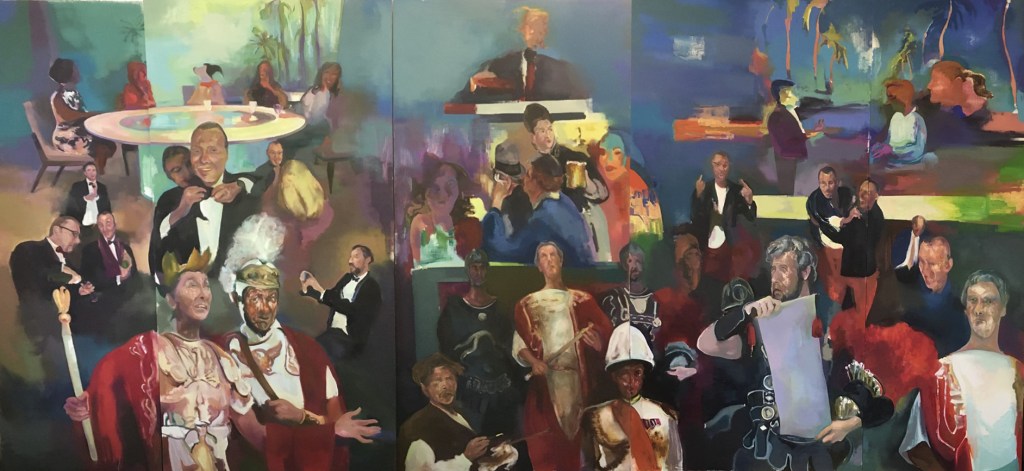
    Brandford paints large pictures filled with figures culled from classical paintings and images swiped from social media. If as John Berger once wrote that Turner “best represents most fully the character of the British 19th century,” then Brandford best and most brilliantly represents Britain’s culture in the digital age and its endless, chaotic stream of images.
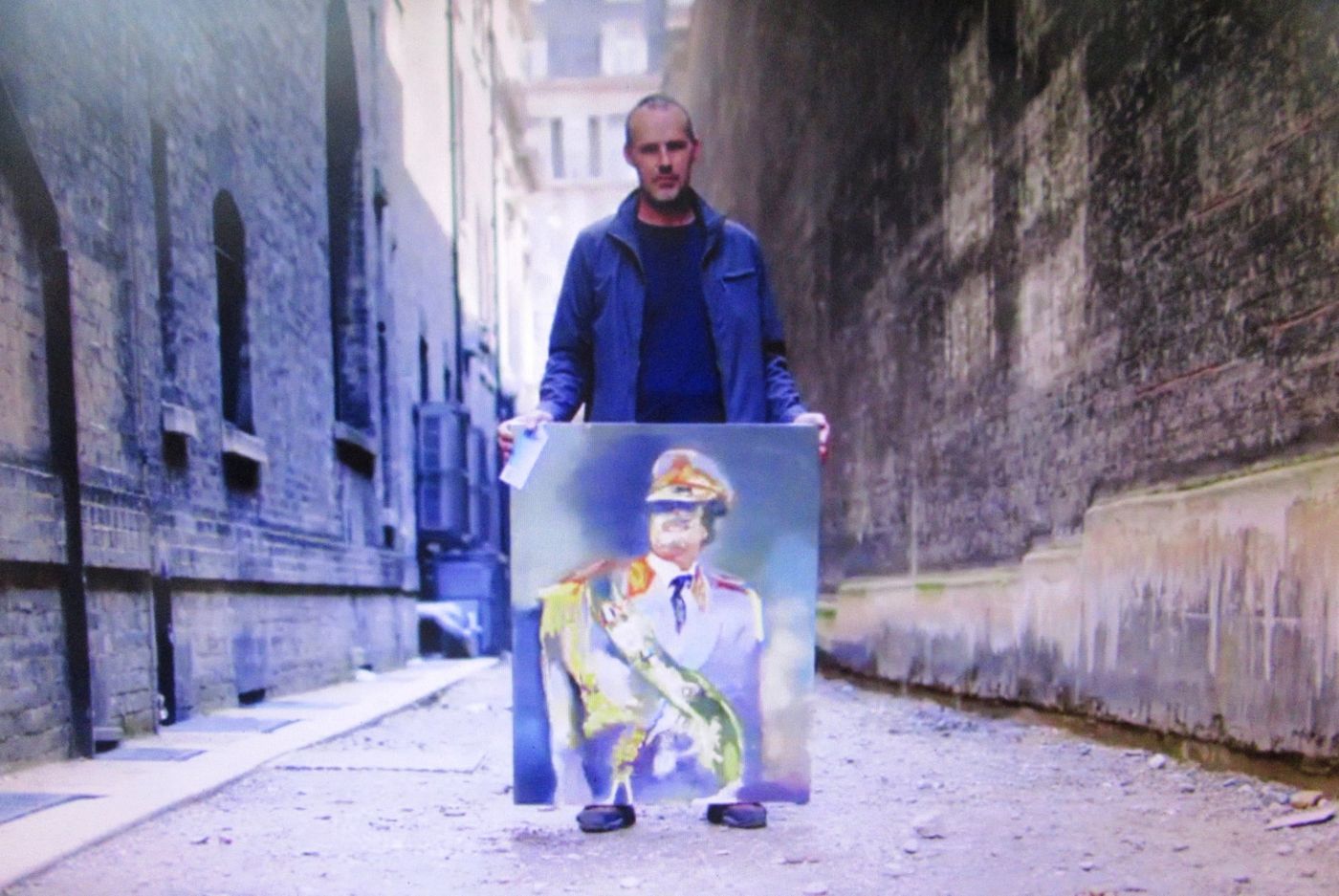
    Paul Brandford, artist, Gadaffi
    The artist Paul Brandford.

    Today Brandford is working at his studio. The studio is in Hackney Wick. He shares it with his wife the artist Jeanette Barnes. But never at the same time.

    “The actual making of a painting is not a spectator sport,” says Brandford. “All sorts of things, instinctive things, stupid things, inexplicable things go on. They’re done for the painting to become itself – not for the amusement of others. Being watched does inhibit behaviour. Painting – in my book – is a distinctly private and personal enterprise. Which is completely at odds with the notion that you then want everyone to look at it once it’s done. I’m not the first person to acknowledge that the whole thing is completely ridiculous.”
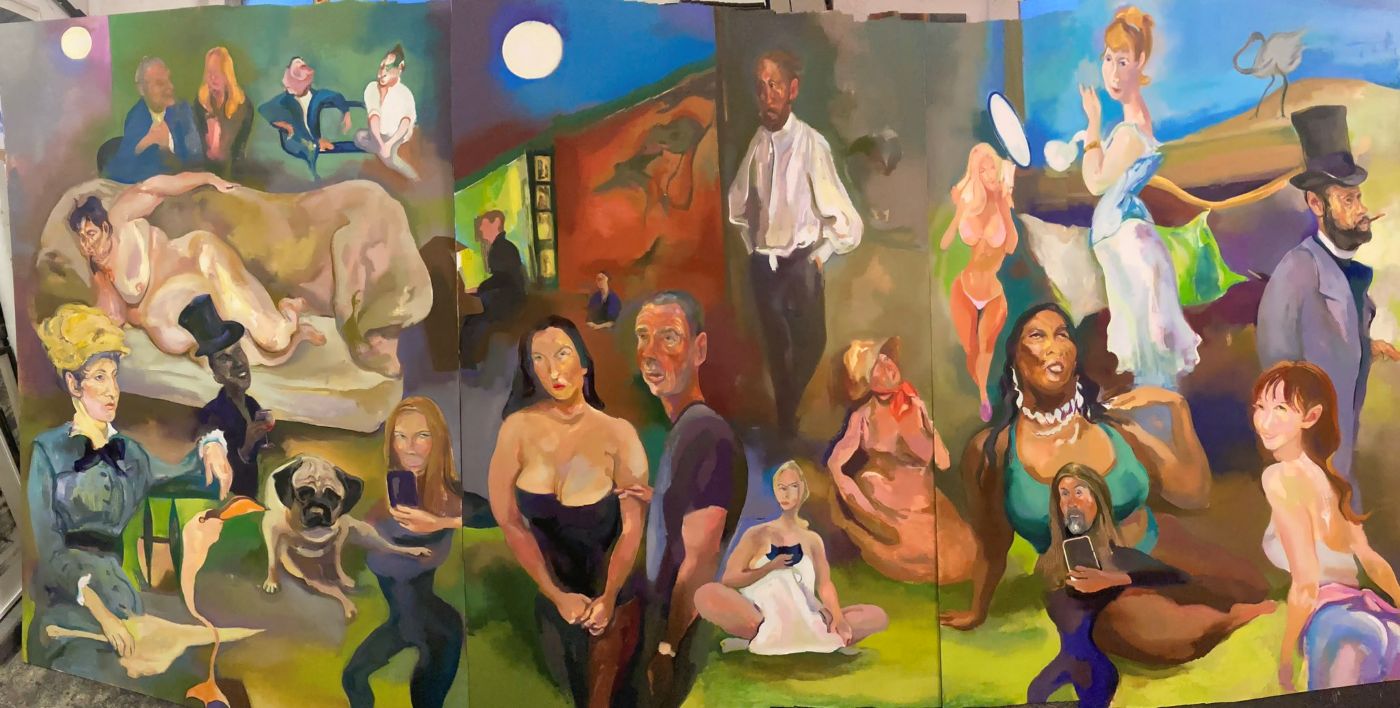
    Paul Brandford, artist, work in progress
    Work in progress.

    What are you working on today?

    Paul Brandford: I’ve got plans for a painting based on derogatory photoshops that have been slung around twitter between people with some degree of creativity but nothing better to do with it. I like sourcing a subject by chance a lot of the time – it jars against themes that I’d naturally select to somehow energise an image.

    How do you paint?

    PB: I like to paint on a well primed board – it somehow enhances the physical aspect of paint and painting. Nothing soaks in – it’s all on the surface so that regardless of the illusion created the painting is also undeniably a thing. If I’m painting something from a collage – I’ll assemble the collage in a way that seems interesting and then draw it – maybe in charcoal, maybe in pastel and ink on quite a large scale to test if the collage is at all feasible on a much larger scale. I like to paint quickly and instinctively so that a decent amount of prep is essential to this.

    If I’m painting something much smaller or want to be more spontaneous – I’ll just paint directly from the source without any prep. The big things take a few months from beginning to end, sometimes it’s good just to hack something out in a single day without too much thought or expectation.

    When things aren’t going as you’d like or as you might have expected that actually creates an opportunity to develop what you’re doing in a new way – so it’s not all bad. The worse thing is when it’s going really well and you’re concerned about not spoiling the thing and you’ll fuck it up by being too careful.

    How do you choose what you’re working on?

    PB: I think the first attraction to a theme or subject has to be primarily visual. For some reason you like the look of a thing or the idea of what you might turn it into. It’s not a precise thing. There are always the odd things that you draw and paint that don’t seem to fit in with the rest of it, and that’s a good thing.

    Themes go in cycles and invariably run their course, wars, politicians, film and television, glitches in communication. In a funny way the subjects occur and choose themselves. There does become a point though when more work on a subject or theme feels repetitious or safe in some way – when you know too much about what you’re going to do. Then it’s time to move on.

    How do you start a painting?

    PB: Quite traditionally in some ways – you have to make sure that on a large scale your design is going to fit but initially your sense of placement has to be flexible enough to allow for changes of mind – so big blocks of simple colour roughly where I think they should be. I avoid getting sucked into detail until a sense of the whole becomes more evident. On something smaller though I’d just do what I like – sometimes to break the habits of a fixed process. My paintings have been on board for about thirty years.
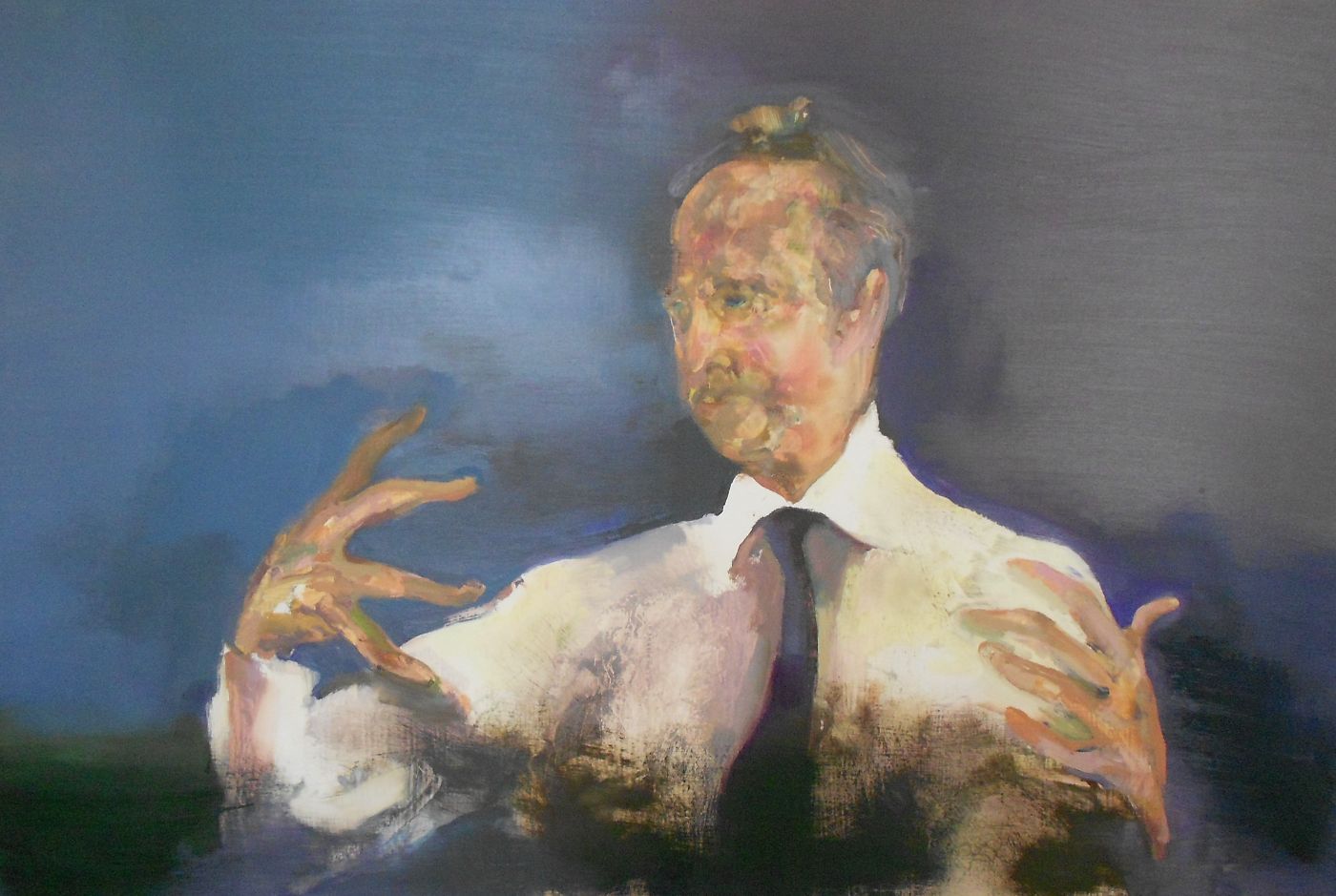
    Paul Brandford, artist, painting, David Cameron
    David Cameron.

    Tell me about your paintings of politicians?

    PB: These started by chance – a strange photo of a politician in a newspaper. They’re constantly photographed meaning unguarded and awkward moments will be used by the press to ridicule or undermine.
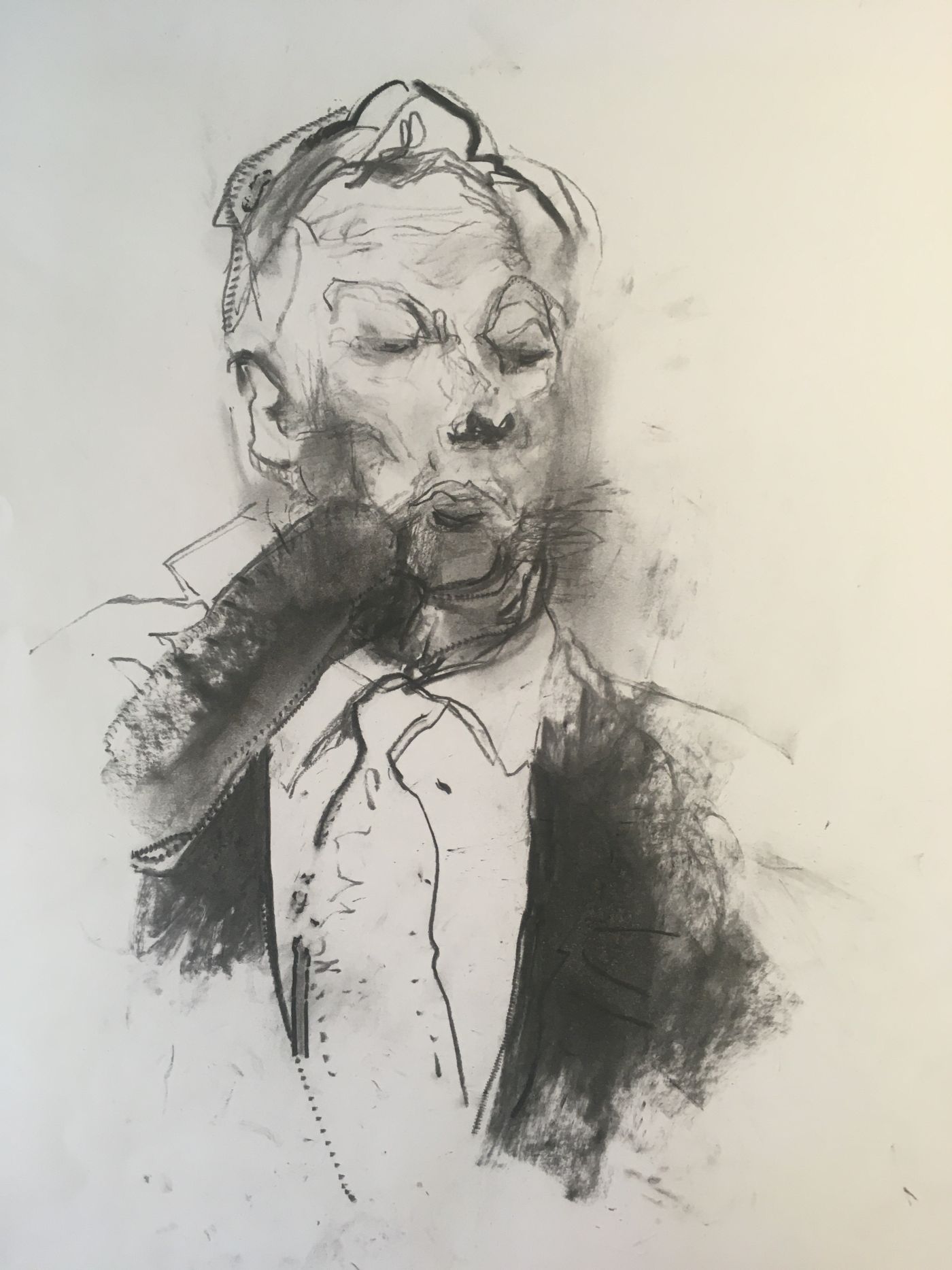
    Paul Brandford, artist, sketch, Mark Thatcher
    Mark Thatcher.

    PB: One of the earliest examples was not strictly a politician but Mark Thatcher – on trial in South Africa – the press were jabbing microphones right into his face as he left the court. The resulting photographs were comedic and provocative, which I enjoyed painting (almost as if there was some cross over with Carry On characters.
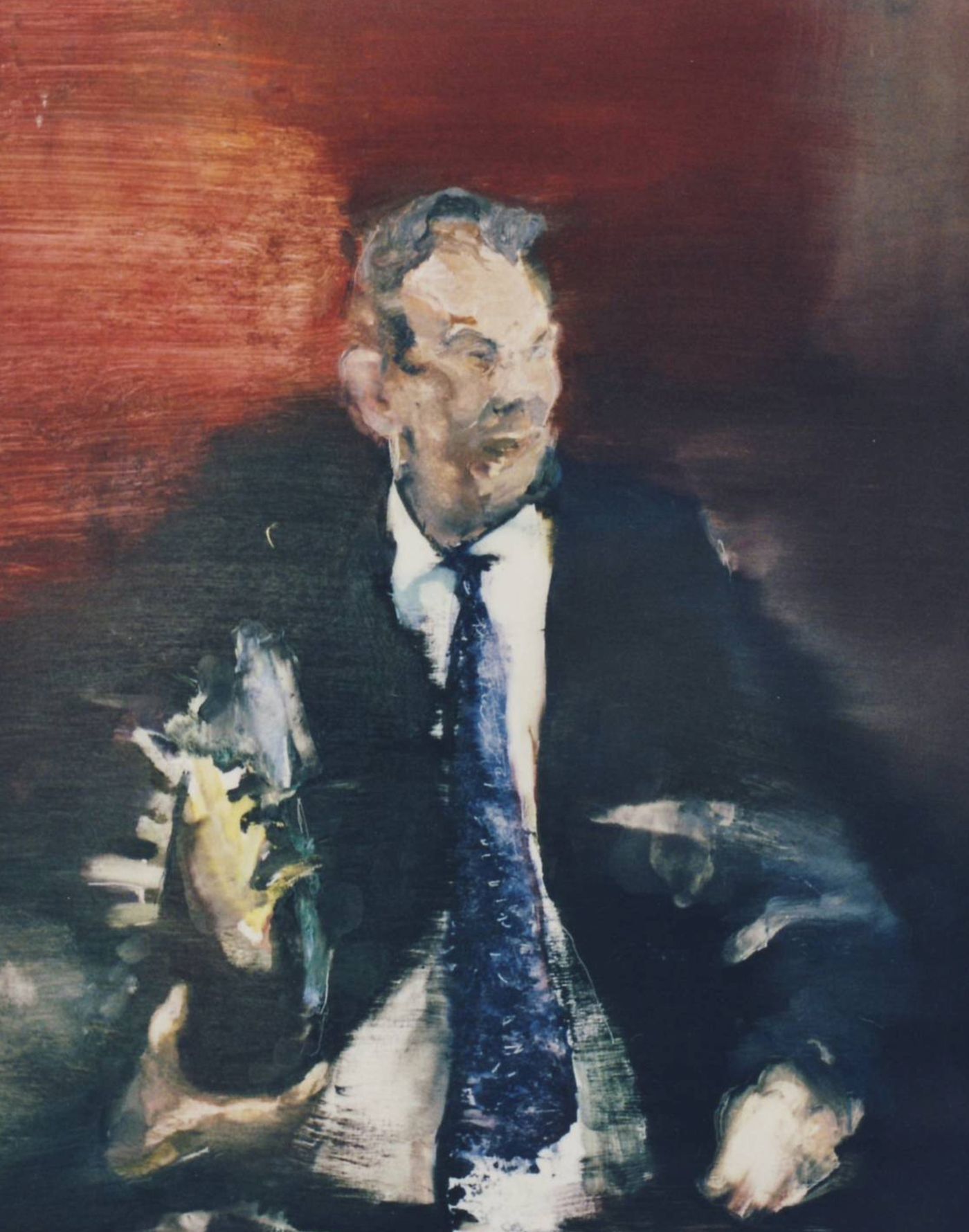
    Paul Brandford, art, artist, Tony Blair, painting, Spitting Image
    Tony Blair.

    PB: I did a lot of Tony Blair, Pope Benedict, Boris Johnson (when he was London’s Mayor) and David Cameron – who’s distinctly odd shaped head took some while to get to grips with. In the earlier pictures I’d sometimes tread on them to agitate the surface with footprints and studio dirt. They were painted not on an easel but on the floor so that the image could take whatever physical treatment I came up with without falling over.
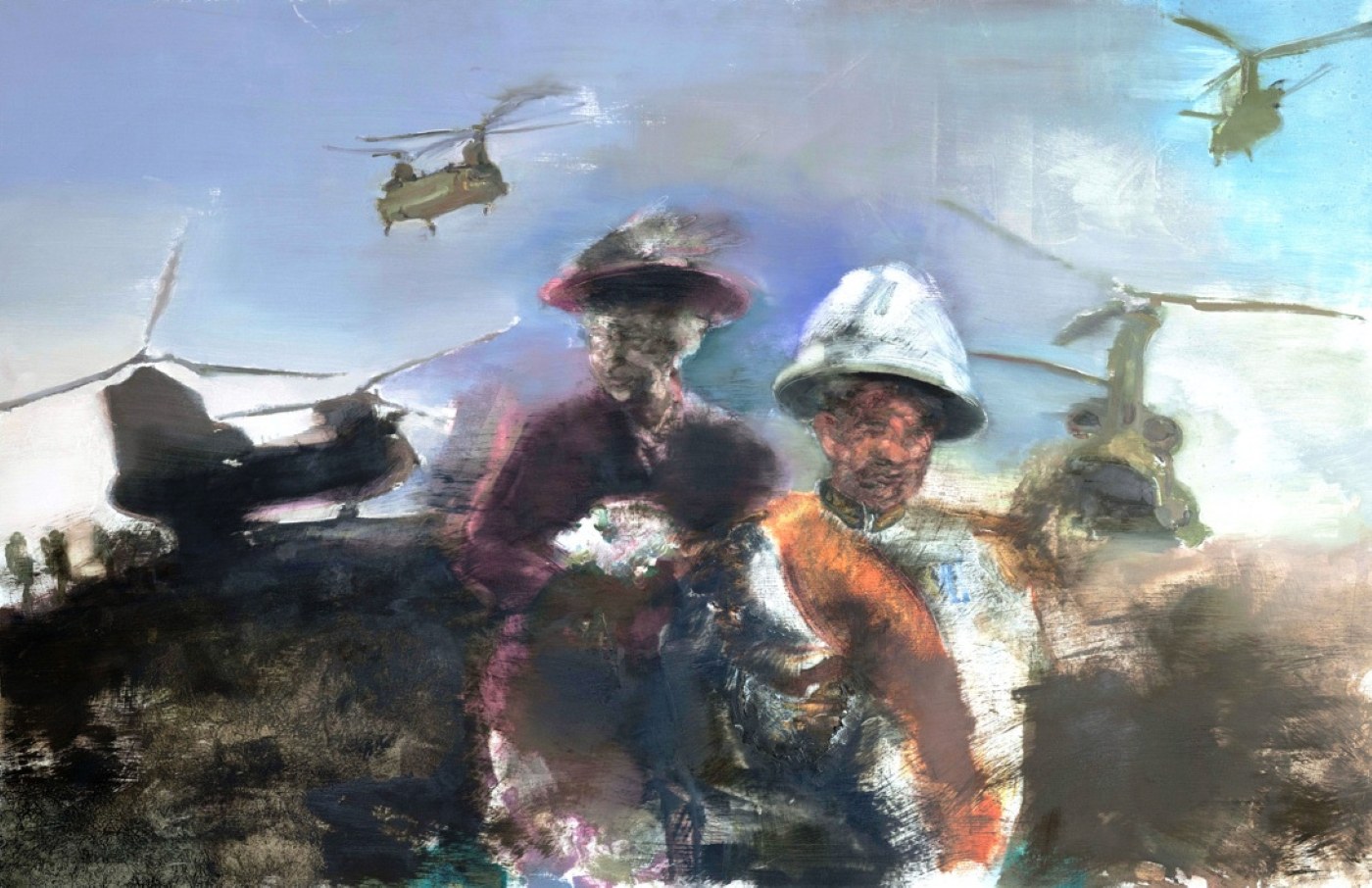
    PAUL BRANFORD, art, painting, Royalty

    Tell me about your paintings of Royalty?

    PB: My family were big royalists, me less so.

    The idea that, like the politicians, you begin with something or someone recognisable to most people means that the manipulations, oddities and accidents will appear more pronounced and the image is about that as much as it is about the original subject. I also like playing about with the respect agenda – accept your place, know your betters. I wasn’t quite old enough to be a punk in the mid to late seventies, but I was old enough to see what it meant. There’s also so much scope to be had when dealing with uniforms – I have no intention of carefully rendering King Charles’s medals, I have every intention of splatting paint about to somehow degrade their supposed meaning or value.
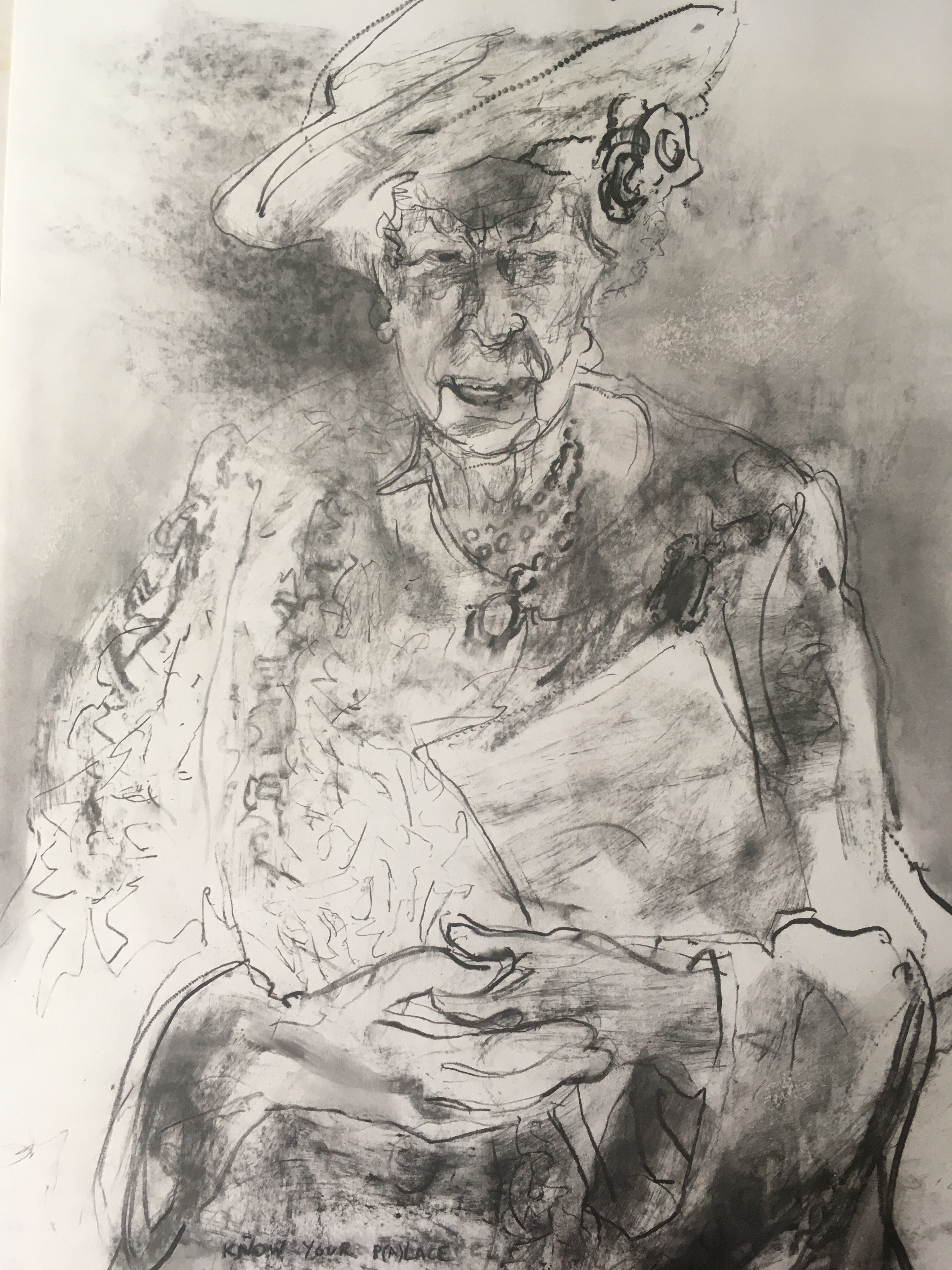
    Paul Brandford, Queen Elizabeth II, royalty, painting, art, artist
    Queen Elizabeth II.

    Where do ‘Carry On’ films fit in with your work?

    PB: Carry On films have always been there. I watched them as a little kid, I still watch them from time to time now – not that you’ll find them on the telly that much anymore.

    The best ones are very well scripted and the timing of the delivery is excellent. The cast of characters – though I never much cared for Jim Dale (though Carry On Cowboy is very much underrated in my book) or Barbara Windsor but Sid James, Kenneth Williams and Joan Simms are fine comedy actors.
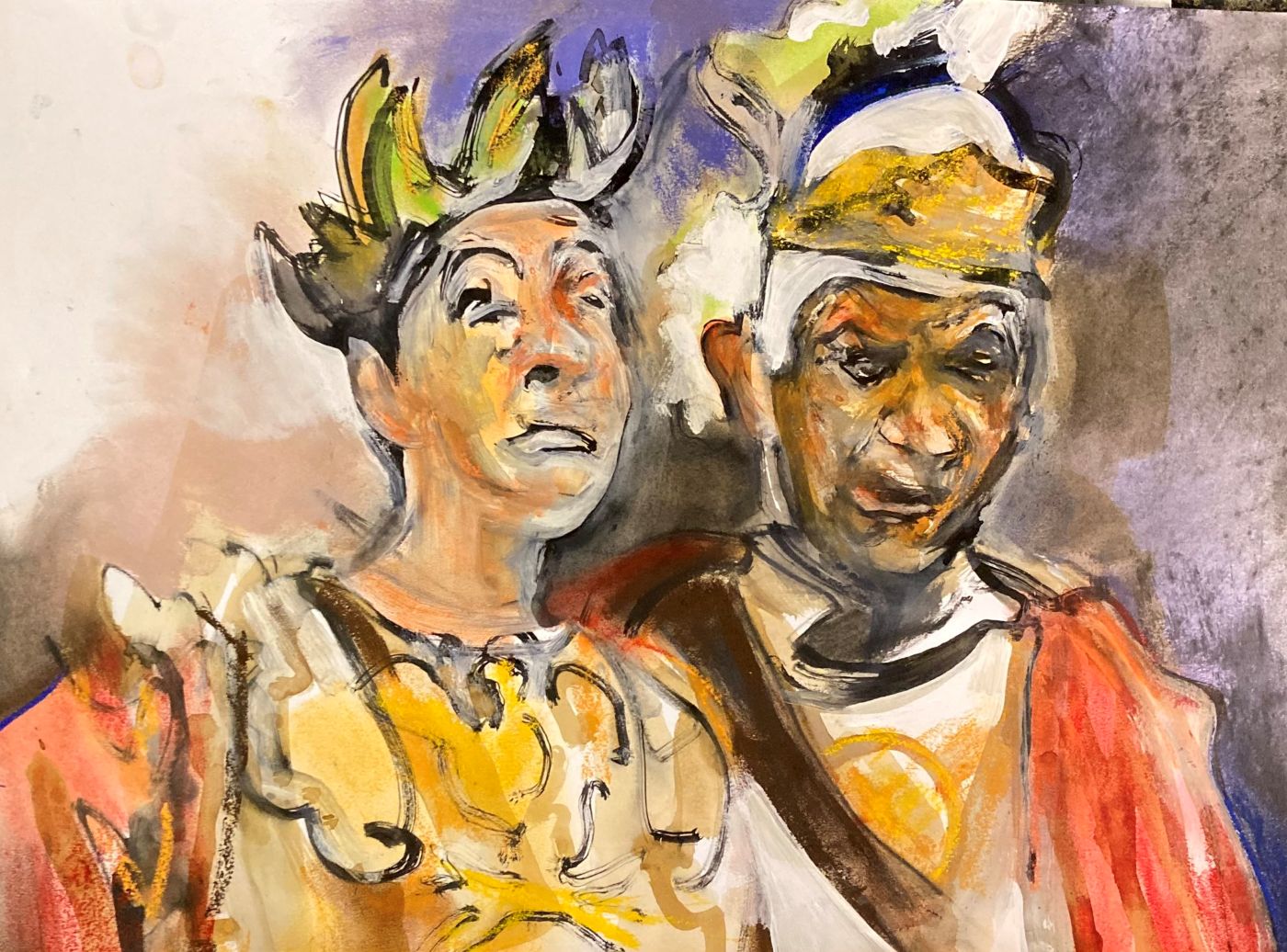
    Paul Brandford, Kenneth Williams, Sid James, art, artist, films
    Kenneth Williams and Sid James in ‘Carry on Cleo’.

    PB: As a kid I liked the idea that big schemes of pompous figures, powerful figures, could be undone by the little man or by chance occurrences. They were anarchic, disrespectful and anti-establishment in a playful way. Sid is always earthy, willing to ride his luck and take his pleasures where he can find them – he often finds himself in a senior (and uniformed) position which he clearly does not merit. Kenneth has grand airs, disliking anything physical or menial. He aspires to greatness, even from a privileged position, without having the means to satisfactorily attain his goals. He remains jealous and thwarted. The nature of us all is somehow captured by this dynamic between them both – the body and the mind perpetually working against each other.

    When Sid James appears in a painting, it’s a sign that the viewer that the situation is inherently ridiculous and prone to unravel – especially when pertaining to war or conquest. The man in the uniform doesn’t buy into the value system that put him there.
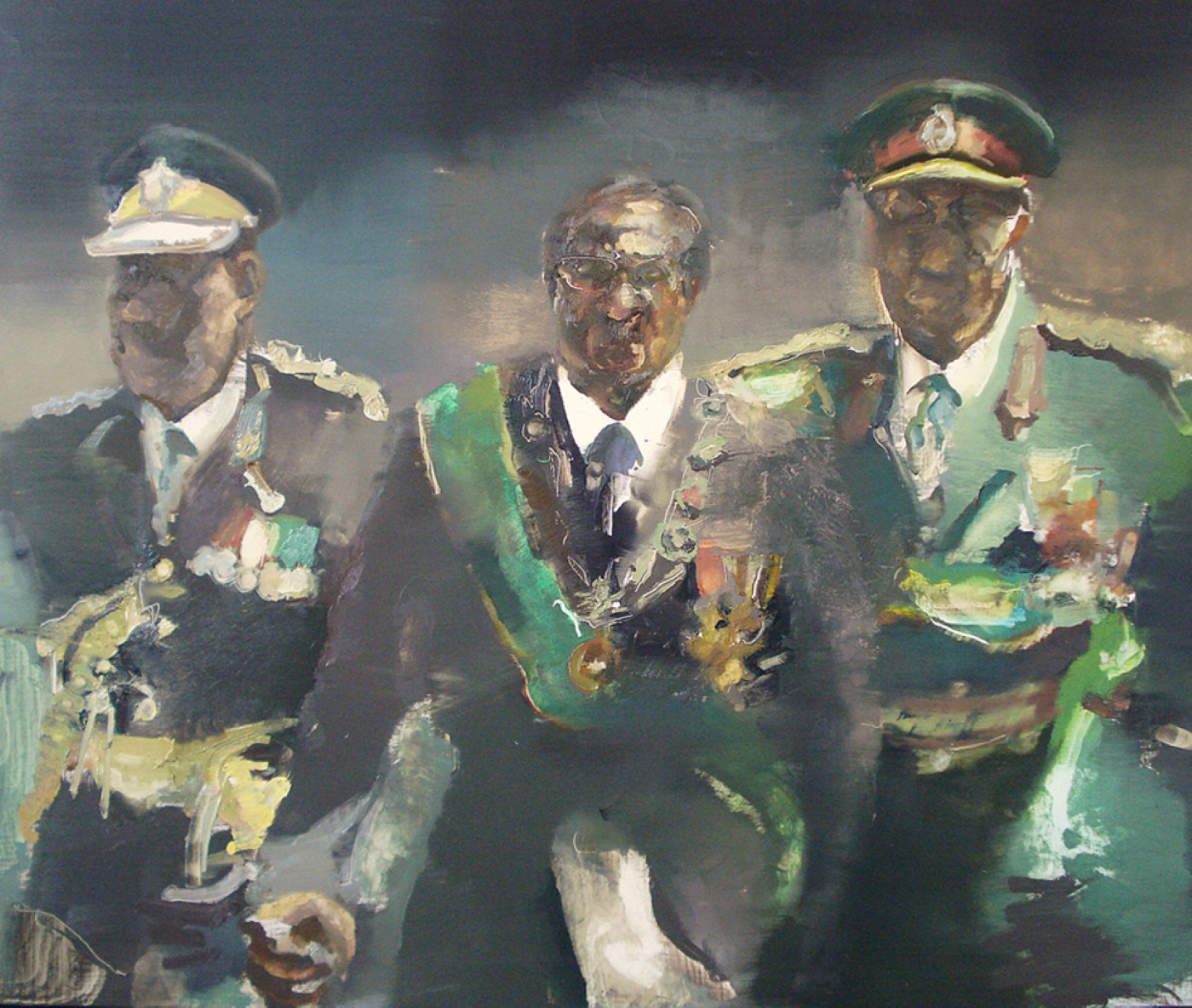
    Paul Brandford, artist, Mugabe, politicians, military, art, painting

    What are your favourite movies?

    PB: The films I’ve watched the most times in no particular order:

    The Talented Mr Ripley, Carry On Up the Khyber, Carry On Cleo, Gladiator and In Bruges.

    My favourite art films are The Rebel, The Final Portrait and Love is the Devil.

    More recently I watched Sorry To Bother You- which I thought was incredibly imaginative without being over reliant upon fantasy..

    I also enjoy zombie movies – I find them very relaxing.

    Who are your comedy heroes?

    PB: In the seventies Dave Allen and Leonard Rossiter really changed my view of what entertainment actually was. Anyone sitting through a pure diet of The Good Old Days,  Mike Yarwood or Seaside Special (or was it Summertime Special?) would think that actual entertainment never existed.

    Mel Brooks is massively innovative – my big picture with all the comedic figures from fake or reimagined history was inspired in a way by the end of Blazing Saddles where all the different actors from different film sets collide and a huge punch up ensues. That painting also comes from seeing vast Tintorettoes in Venice. Mine tries to deal with how the internet throws past, present and future, truths and falsehoods, the serious and the inane simultaneously at the user in a potentially overwhelming experience.

    Stewart Lee has his critics but the way in which he can structure threads is impressive and in my opinion genuinely inventive.

    I also very much liked the way that Bruce Forsyth used to bully the contestants at the start of The Generation Game. I learnt a lot from that.

    You have said you ”want to make poetry from the conflict between authority and fear’’, can you explain this?

    PB: My dad was a bit of an authoritarian bully when I was a kid, but that’s because he lacked the personal courage to be something else or to do something else. Paintings of dictators and politicians most probably are re-enactments of all that.
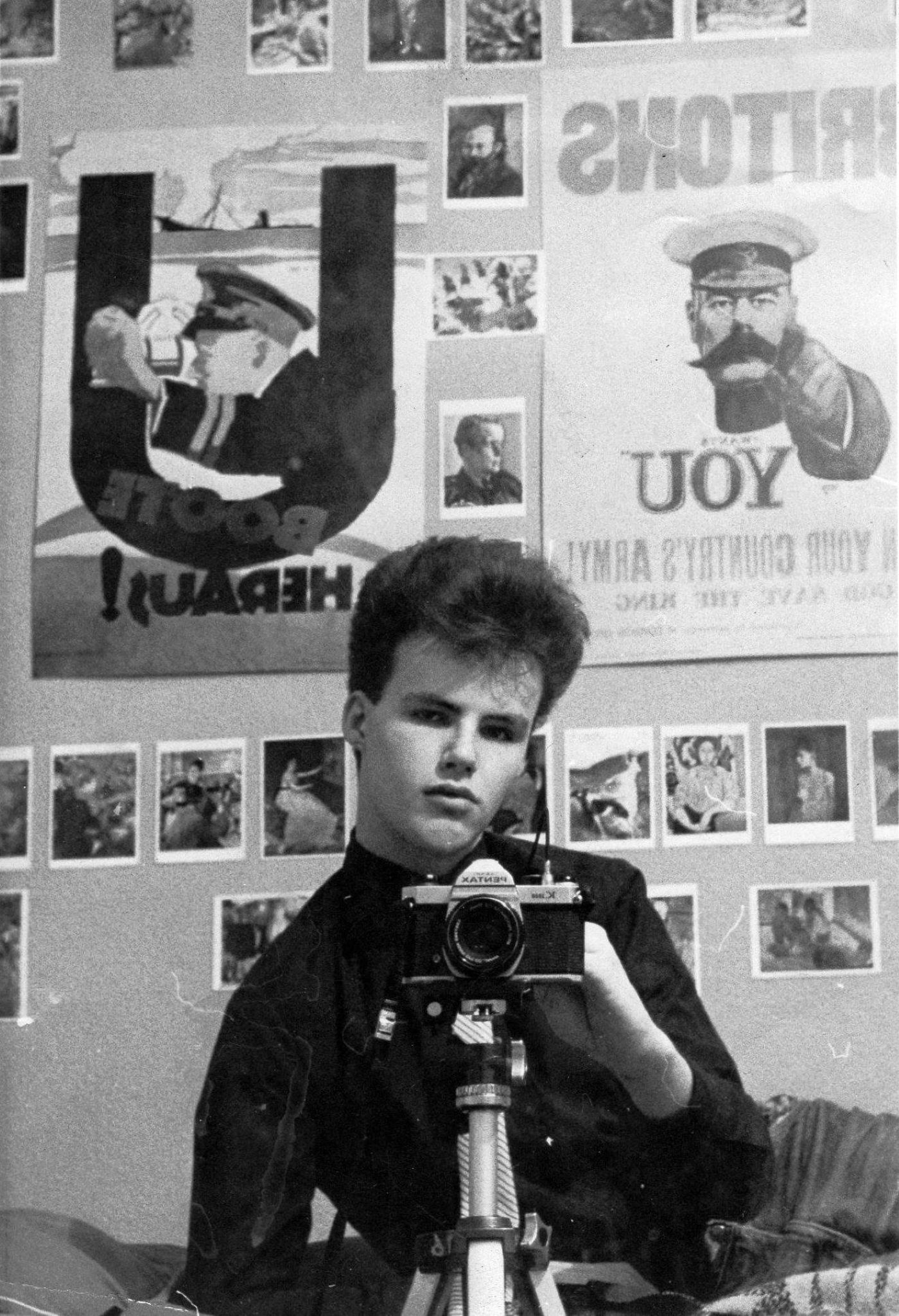
    Paul Brandford, self-portrait, 1983, photography
    Portrait of the artist as a young man

    What’s your background? What compelled you to become an artist?

    PB: My background is unremarkable in every way. Art was an escape from that.

    My parents had nine to five jobs – I’d imagine they were unrewarding in every way but in the seventies people did what they did and so long as they could go to the work’s dinner – dance, have their week away in Clacton, have their suburban new build they didn’t think too deeply or ask too many questions. I knew that wasn’t for me from quite a young age. My parents wanted me to be an architect – the respectable face of creativity – or so they imagined.

    Should art be moral?

    PB: It really doesn’t have to be. People will see a thing and project their own values onto it regardless. Which is fine, if something is in the public domain – it’s theirs just as much as it’s yours.
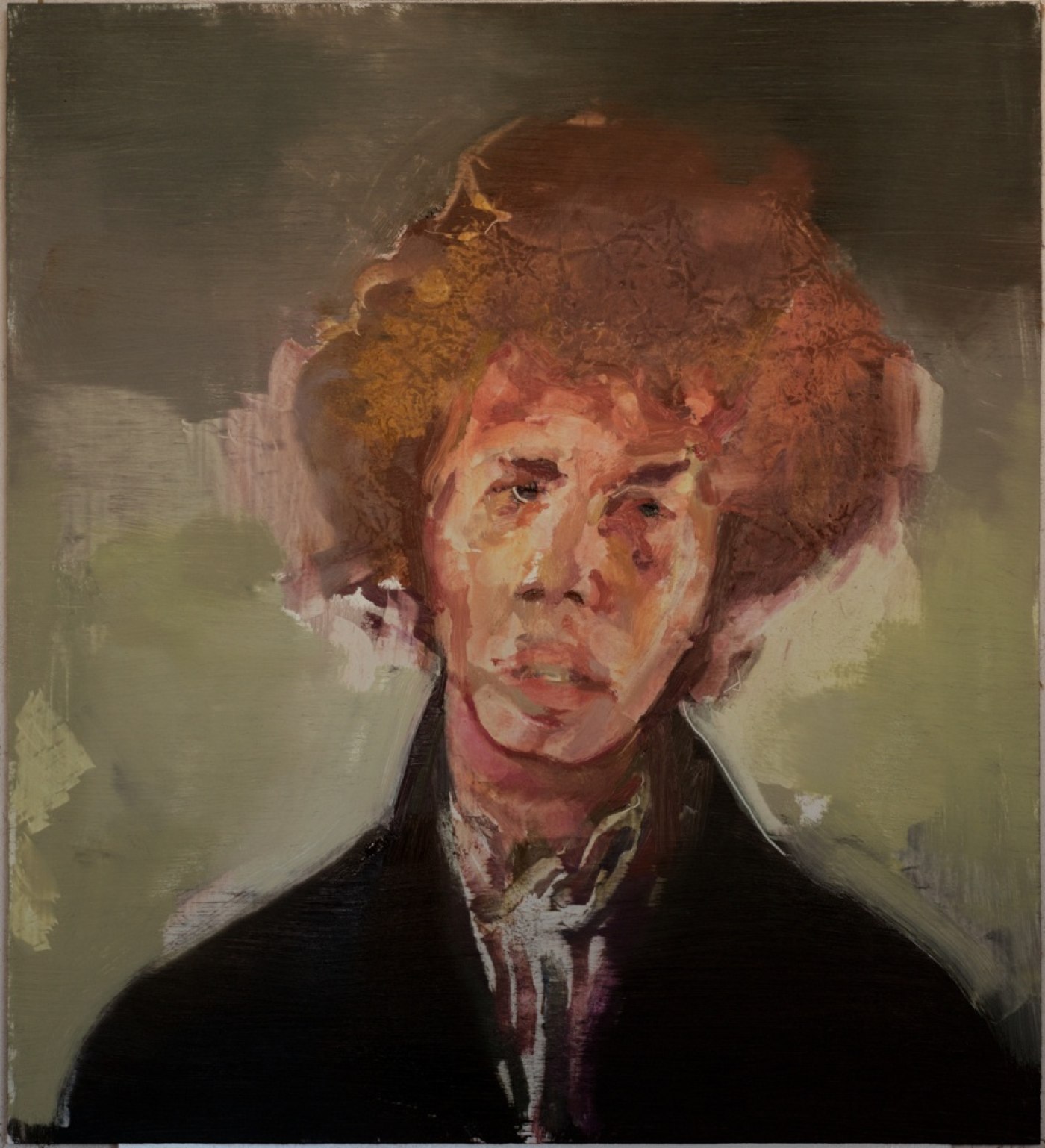
    Paul Brandford, artist, political, portrait

    Tell me about your British National Party (BNP) Youth Portraits? What was your intention? What was the response?

    PB: My wife loves those paintings – the way that they’ve been made. They’re a few years old now but they’ve never been exhibited. I’m not sure that there’s much of an appetite to either show work like that these days.

    It all began when someone sent me a video link on Twitter. It was a BNP electoral ad for the 2014 Euro elections. Kids barely out of school were reading a shockingly poor script featuring a tirade about the banking crash of 2008 and obviously immigration and a host of other perceived (or actual) unfairness crippling Britain at the time and how the BNP were the best hope for a new future. The production values were poor. The kids involved didn’t deliver their lines too well, collars were tucked into a jumper on one side, pulled out on the other. The thing that really interested me (I was as a theme concerned with the idea of artworks that no one would want on their walls at the time) was that at seventeen these kids were at the junction between childhood and adulthood. My brother at that time in his life got into heavy metal and then Christianity and quite quickly out of them – in the search for identity and belonging I suppose. Identity is up for grabs when you’re seventeen. So we’ve got these kids making these statements. Do they believe what they’re saying? Will they grow into being something or someone else. The film catches them at a transitional moment doing something that’s pretty far out. I do know that the kid who spoke with the most confidence got sent down subsequently for involvement in some sort of far right terror plot, one of the girls was apparently Nick Griffin’s daughter – but I don’t know which one.

    Paul Brandford, artist, political portrait, painting

    PB: The portraits are trying to show a bunch of seventeen year olds without giving too much away. It’s the title that then sets the viewer’s mind to work. The original video was pulled from YouTube several years ago.

    Do critics fail artists?

    PB: Art critics, in my opinion, hardly exist these days. People around long enough to have insight and experience, open minded enough to understand meaning within the new. Most critics don’t criticize, they’re more like feature writers, an extended PR department. With such an overwhelming diversity of art practice currently available it’s hard to blame them to be fair.

    I probably have more issue with curators. Artists seem to have become a lumpen chaotic mass which can only be made sense of by way of curatorial intervention. Curators have become akin to DJs to some extent. More important than those who actually create the music.

    Curatorship is important – I’ve done it myself but they’ve skewed the game by putting their agendas, their catalogue essays in pole position. That sense of raw visual encounter is undermined by their academic priorities.
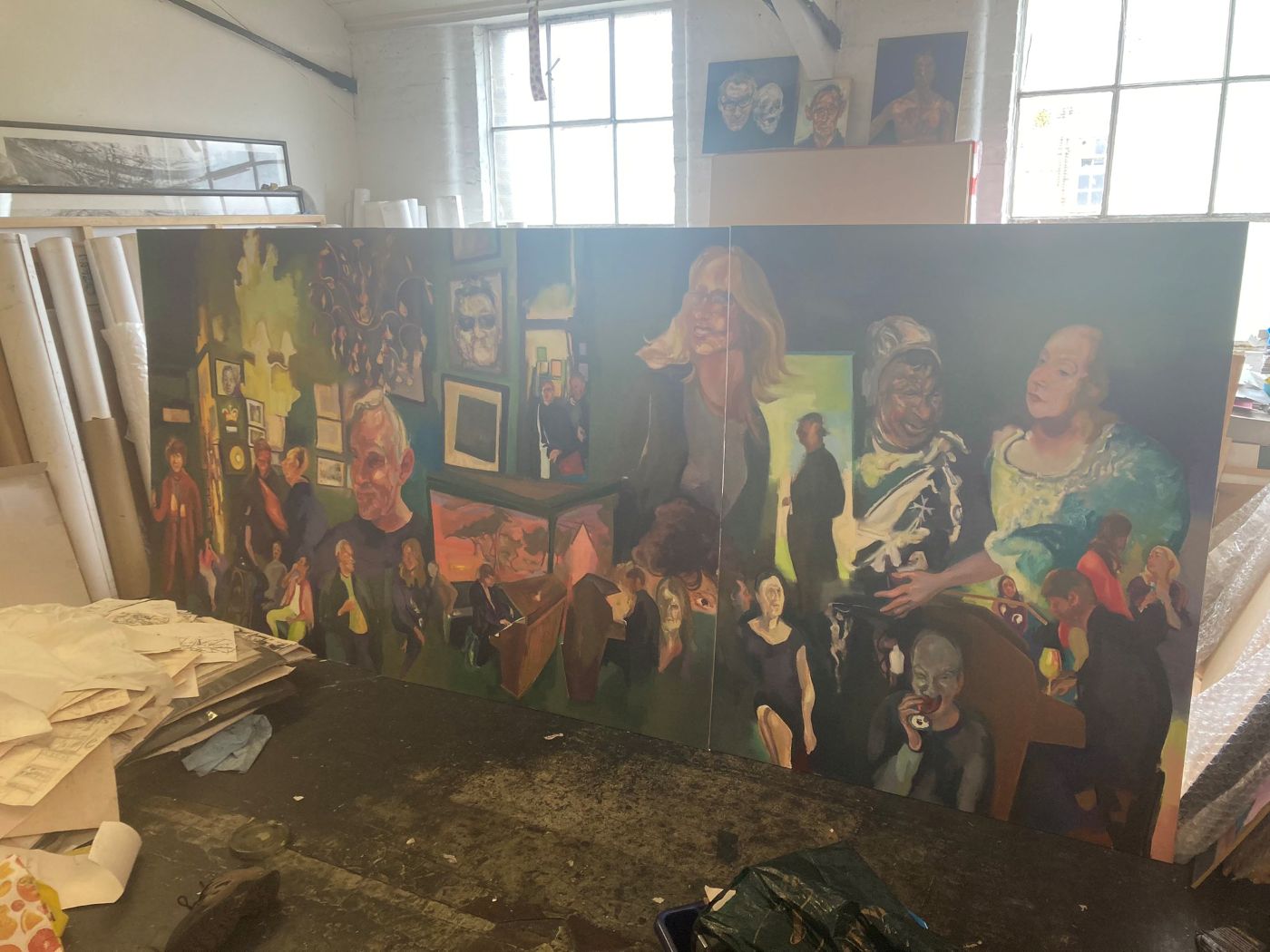
    How long do you spend in the studio?

    PB: Depending on what I’m up to. Big paintings need serious commitment time wise. Smaller things less so.

    I’ve never gone to the studio every day as if it was a nine to five. You have bursts of activity rather than endless slog.

    Once you’re there you’d want to put in a decent six, seven or eight hours – otherwise the journey’s a bit pointless. Sometimes you think you’re about to go home and find yourself still there a couple of hours later. If things aren’t going well creatively Jeanette and I tell each other to stay in the room like Eddie Morra at the start of Limitless.
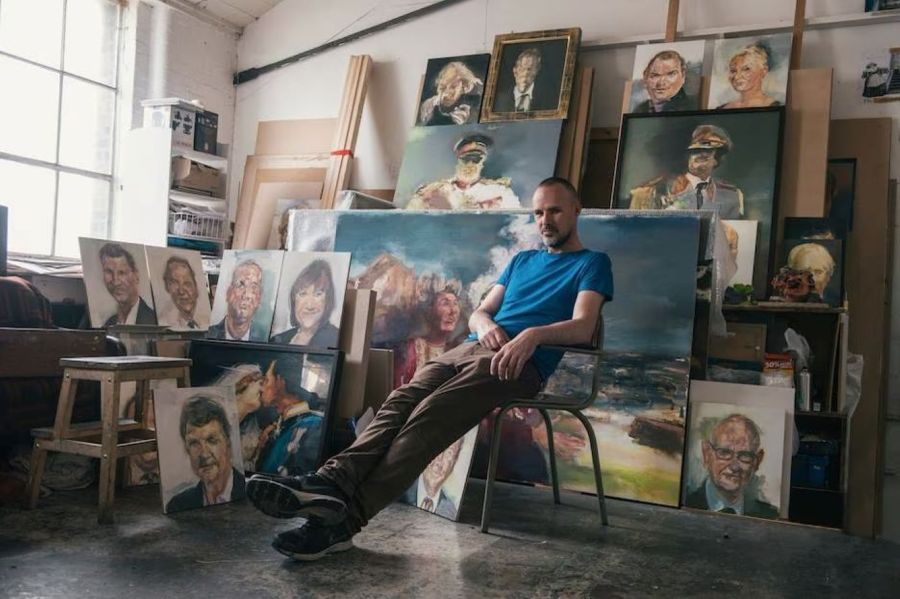
    With thanks to Paul Brandford.

    All images copyright Paul Brandford, used by kind permission.

    Buy Jeanette Barnes & Paul Brandford’s book ‘City Sketching Reimagined’ here.
  • A Few Words with Andrew Loog Oldham


    Let’s not start at the beginning, let’s start…

    London, 1964.

    Exterior Night. A powder blue chevy is driving the wrong way down the Edgware Road. Sitting in the passenger seat is the Rolling Stones’ manager/producer Andrew Loog Oldham (played by say Matt Molotov of the Molotovs). Driving is Oldham’s minder-cum-chauffeur-cum-wannabe-gangster Reg King (played by Tom Hardy). In the back is Keith Richards (played by some-as-yet-to-be-discovered actor). The car swerves right then left. Dodges on-coming vehicles. Lights flashing, horns blaring.

    Interior Night. Inside the car Oldham is laughing maniacally. He leans out of the passenger window punching at on-coming cars.

    Keith Richards is aghast.

    Richards: Fuck’s sake, Andrew.

    Exterior Night. A large lorry is heading directly towards the chevy. Lights flashing, horn peeping. At the last moment, King swerves the car away from the oncoming juggernaut.

    Oldham is giddy with excitement. His view of the road is like that quote allegedly said by Greta Garbo or was it Marlene Dietrich? “rubies ahead of me, diamonds coming towards me.”

    The car speeds another hundred yards. Weaving in-and-out of traffic. King pulls a handbrake turn into a side street parking the vehicle directly outside Oldman’s apartment at Ivor Court on Gloucester Place.

    Exterior Night. Oldham emerges from the car laughing hysterically. He can hardly catch his breath. As the others alight in the background, Oldham looks directly at the camera and says.

    Oldham: What a fucking blast.

     Though based on true events, this opening sequence represents one of those cinematic tropes used to explain some narrative point or offer a potted biography of the central character. See Ken Russell‘s The Devils, or Dante’s Inferno, or The Debussy Film, or Lindsay Kemp’s dance at the beginning of Derek Jarman‘s Sebastiane.

    You see, Andrew Loog Oldham’s biography is ripe for a movie. Two movies in fact. The first adapted from volume one of Oldham’s memoirs Stoned, covering his youth and early career up to getting the Rolling Stones their first number one. The second based on volume deux 2Stoned which would cover Oldham’s success as the Stones’ manager and producer and the unravelling of his relationship with the band. The films would be like That’ll Be the Day and Stardust with more than a soupcon of menace from Slade in Flame. Except everything in these movies would be true – well, almost.

    ‘Playing God was just my sideline, actually. Getting records cut was my principal business.’

    We are all gifted a certain amount of luck in our lives. It’s randomly cast like seeds across soil. Sometimes it grows. Sometimes it withers. So much is life.

    Oldham made his own luck through hard graft and ambition. Anything was possible because no one ever had told him otherwise. Oldham was an only child, which meant he never encountered older siblings to puncture his dreams or pin him down and fart in his face. Though I doubt this would have changed him other than to make him even more determined. 

    The son of an American airman raised by a single mum. His father was killed during the Second War. His father already had a family back in the USA. Oldham was a rebellious schoolboy who sensed there was something better beyond the classroom. An adventure to be gained. A teenager who starred in his own movie which played continuous performances in his head. He took his cues from Cliff Richard singing Move It. James Dean in East of Eden and Rebel Without a Cause. He understood The Shadows were more than entertainment – they were life.

    Most people end-up with just walk-on parts. Oldham had the smarts to know you have to believe in yourself if you ever want to make something happen. This starting point came when Oldham saw Paul Scofield as ambitious agent Johnny Jackson in the stage musical Expresso Bongo when he was twelve. In the play, Jackson watched teenage girls become obsessed with a no-talent bongo-playing singer. Jackson recognised the power of these screaming girls to give him mucho moolah and unparalleled success. As the artist Francis Bacon took his cue from the character of Charles Strickland in Somerset Maugham’s novel The Moon and Sixpence – from whence Bacon pinched the line “the brutality of fact” – Oldham found his in music and film.

    After school, Oldham worked in PR. He talked his way into working with Mary Quant – because no one told him he couldn’t. He was fearless. Everything was possible. He travelled to the south of France. Blagged his way around and met the likes of Lionel Bart and Pablo Picasso. When he returned to England he had a brief spell tour managing the Beatles. This made him want to manage a band. His own band. Then one night when he saw Bob Dylan in a dressing room quietly talking with his manager Albert Grossman. Oldham wanted that intimate rapport with another. He found it one Sunday evening when he was told to go and see a band called the Rolling Stones.

    Andrew Loog Oldham Betina La Plante, Planet Paul, heroes
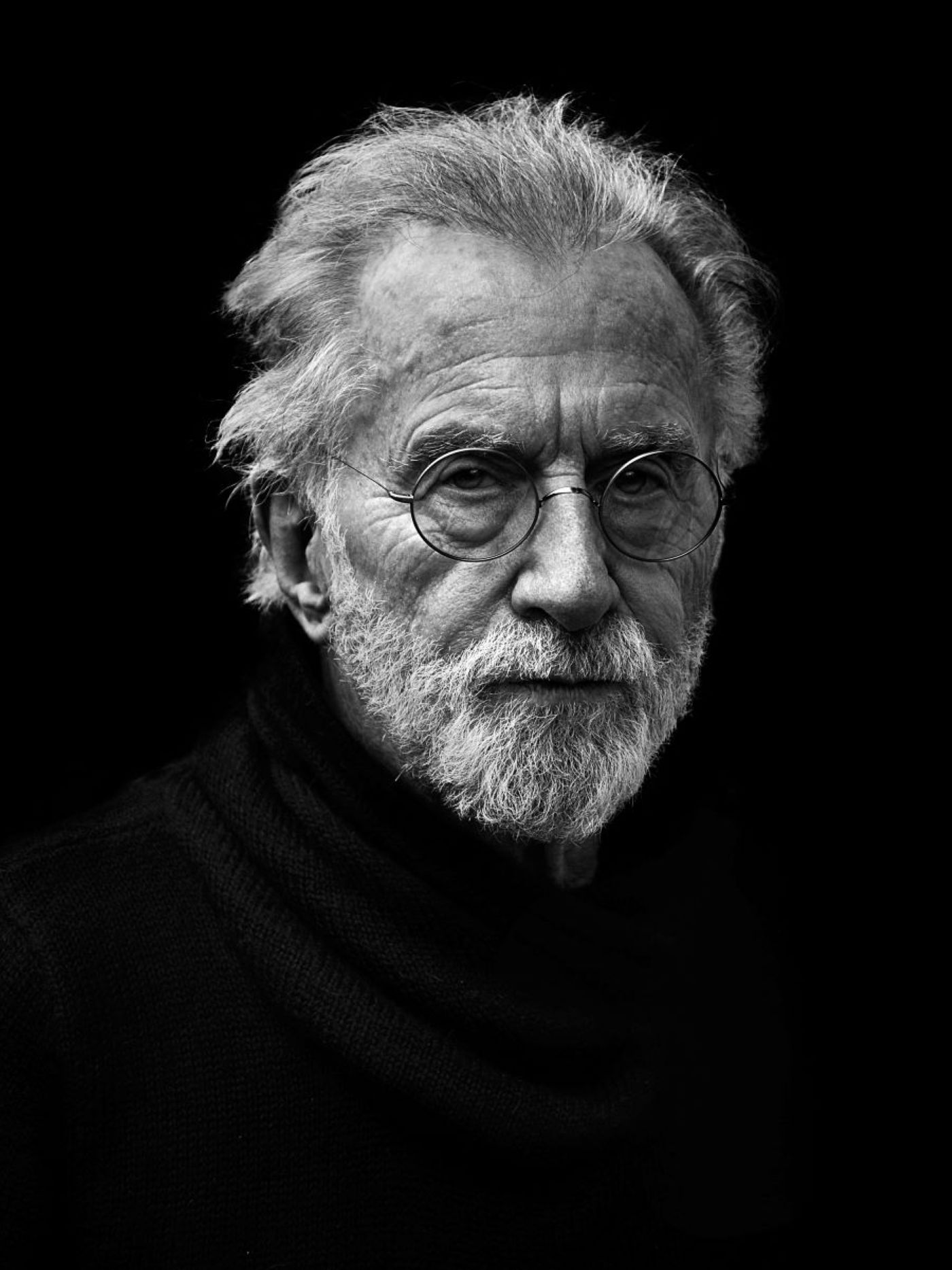
    Andrew Loog Oldham by Betina La Plante.

    What made you think you could be a manager of a band like the Rolling Stones?

    Andrew Loog Oldham: I didn’t think. I had no reference point. I had no fear. It was all really simple. Peter Jones of the Record Mirror told me to go and see them. I did. It was good for everybody…I was quite happy doing PR and I became happier managing the Rolling Stones.

    You loosely described yourself as a hustler. What makes for success and how do you recognise it? How does a hustler know?

    ALO: Hustler is merely a mantle of disguise one wears when you’re winging it. As Mick Jagger said in that self-portrait portrait 25 x 5, “Well, Andrew was younger than us.” I’m not sure what he meant. But it does say it all in Keith’s Life when he said something like, “We got on very well with Andrew when we all liked the same music.” Both sentences are key to what you are asking about.

    As for what makes success? I think you’ve got to regard yourself as successful already. Now you’ve just got to bring everybody on board. No cap in hand. No “Puleeze Mister, give us a chance.” It’s your job to have your act together. Nobody else’s. I read something recently about an act who had picked who went on the road with them by their ability to ride through the bumps.

    How did you produce those classic Stones albums? How did you know what to do?

    ALO: I just didn’t get in the way. I knew when I was contributing and when I was not and when it was time to go to the bathroom.

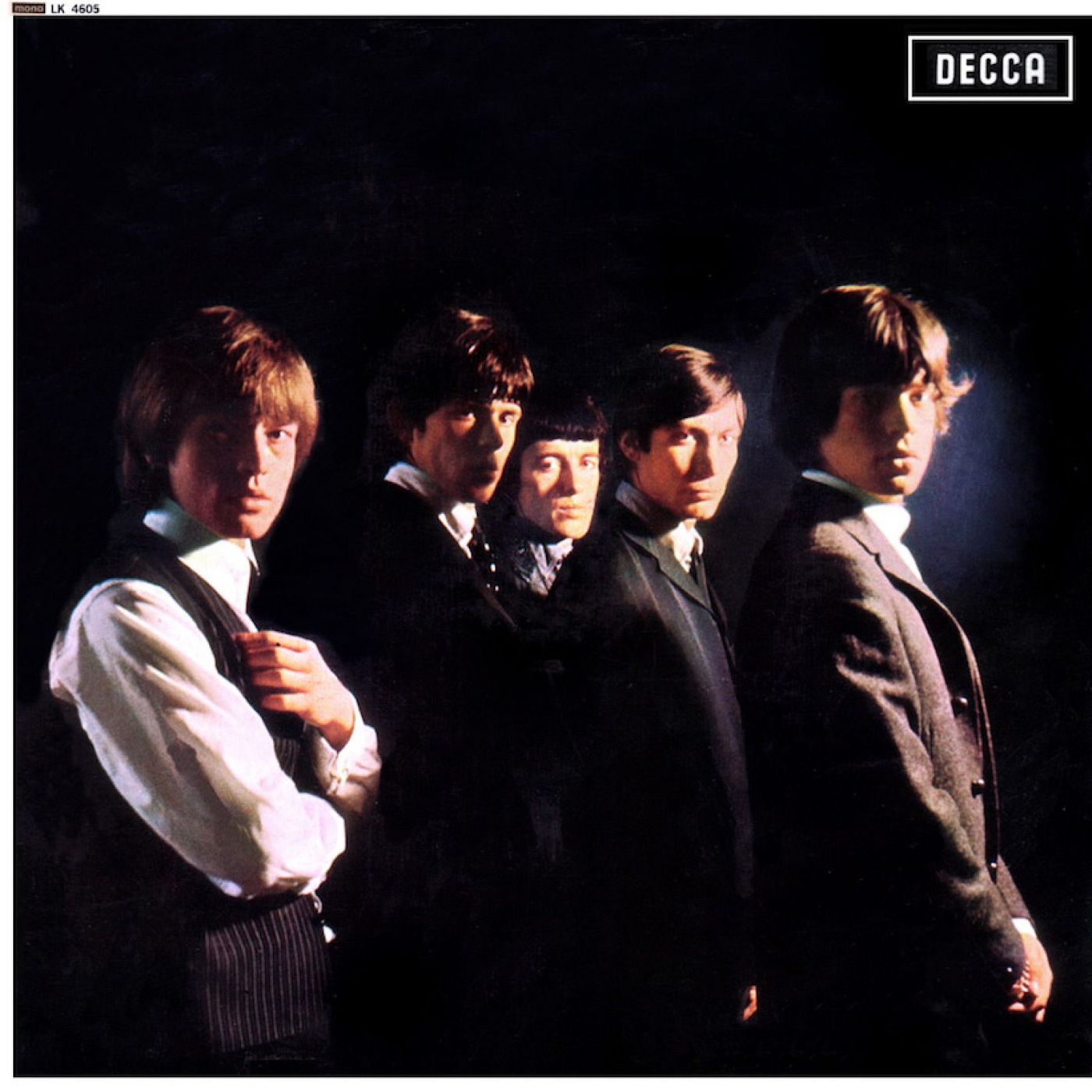
    My older brother had two singles. “She Loves You” by the Beatles and “The Last Time” by the Rolling Stones. When I was a child, I used to listen to these two songs on our parents’ Dansette record player. “She Loves You” was like a beautifully carved Greek sculpture. It was something I could admire but not quite get into. “The Last Time” was all jingly-jangly sensation which opened up another world of excitement. It was a song which would not have been out-of-place 30 years later at the height of Brit pop. But it was the B-side “Play With Fire” by the Stones I loved the best. It was visceral. Haunting. Oldham’s production made it seem Jagger and Richards were singing and playing in my head.

     It was powerful. It was raw. It was dangerous. It hinted at a secret world of sensation still to be tapped. Oldham’s work as a producer with the Stones is up there with George Martin’s work for the Beatles.

    Looking back, what advice would you give your younger self? How did you cope with the success of the sixties?

    ALO: I’ve had this question before and it does not make sense to me. You’d have to be Dorian Gray to get that one. Obviously I did not cope with the success or the stuff that went with living above your means. Both financial and mental. I was having shock treatment by the age of 23. But, if you look at things my way, Brian Epstein was put on this Earth to get the Beatles their recording deal in the place that they got it. Brian Jones was put here to form the Rolling Stones. And I was put here to uncover and press the start button on the Rolling Stones.

    You seem to have a strong sense of yourself and you obviously like yourself.

    ALO:  Very. If you don’t love yourself how can you love anybody else? Just liking is too passive.

    Yet, you sometimes make it sound like you were just in the right place at the right time and things just happened. But you worked hard. You hustled. You were nicknamed ‘Sea Breeze’ because you moved so fast so silently and always got things done. That isn’t life just happening to you, this is someone motivated to get things done for a reason.

    ALO: Yes, it is. As per life happening to you. Cut to August, 1963. Great Newport Street. Stones rehearsal in basement. Rehearsal is not going that well. No song is rescuing us. I leave. I turn right. I get to Leicester Square tube station. Getting out of the car as John [Lennon] and Paul [McCartney]. They can see I’m not as cheerful as they are. They come with me to the rehearsal and play the Stones “I Wanna Be Your Man”. We have our song. Now I’m happy as they were.

    I could tell I, with emphasis on I, got the Stones second single from the Beatles. But that’s not the whole story. I know that this happened because I turned right, not left. That is life happening to me.

    What influenced you growing up?

    ALO: In the beginning Paul Scofield on stage as the manager at the Saville Theatre on Shaftesbury Avenue (ironically acquired later by Brian Epstein) in Wolf Mankowitz’s Expresso Bongo. Wolf was the father of Gered Mankowitz who took such great photos of the Rolling Stones and Marianne Faithfull. Anyway, I had finally had a good school report and so my Mother’s boyfriend got us tickets for Bongo. The moment these tacky church windows descended onto the stage and our pop hero (played by Cliff Richard in the film) croons “The Shrine on the Second Floor” I knew which game I wanted to pursue. I was twelve.

    When I was thirteen, I saw The Girl Can’t Help It with Jayne Mansfield at the Ionic, Golders Green. There were three pre-video clips in that film Gene Vincent, Eddie Cochran and Little Richard that were life changers. James Dean in East of Eden – that’s where we learned to mumble. The Cain and Abel and Mum as Pimp and Dad as religious doormat was much more interesting than the Dad dilemma in the film that followed Rebel Without a Cause and East of Eden was a much better film. Marlon Brando was not an influence as we were all too young to be able to see his films. Ironically, the same is true for a lot of Hayley Mills films.

    Later for a volatile while Anthony Burgess’s A Clockwork Orange. After I landed again after my “Out to Lunch” period, Graham Greene and Gay Talese.

    Oldham’s period of being “out to lunch” is a tale of too much drink and drugs. One drink was too many. A hundred never enough. Oldham suffered from depression. Something he notes with hindsight his Mother may have had. It would explain her emotional remoteness and mood swings. The first sign there was something wrong with Oldham came when the Stones had their first number one. Rather than celebrate, Oldham fled to Paris to be on his own. It was a hint of the storm a-coming.

    His Clockwork Orange phase involved henchman Reg King putting the frighteners on those who crossed Oldham’s path. On one occasion, Oldham had King threaten to break a journalist’s fingers after the poor hack had written some negative comments about Keith Richards’ acne. Keith’s Mum was most upset.

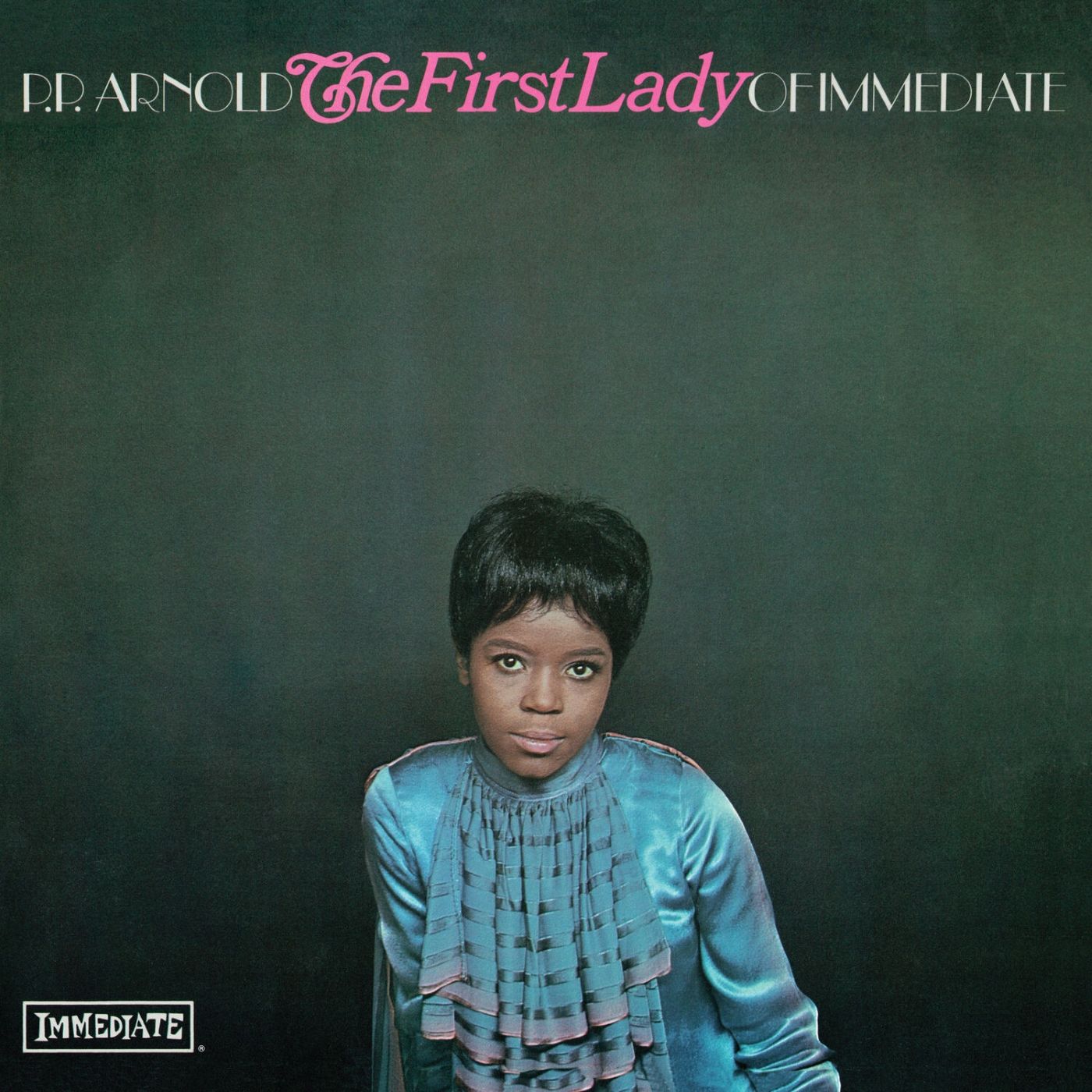
    Yet for all this, Oldham was focused on success. He gave the Stones their bad boy image. He dropped keyboard player Ian Stewart from the band because he wasn’t good looking enough. Most importantly, he forced Mick Jagger and Keith Richards to write songs by locking them up in a room until they had something good. This turned out to be “As Tears Go By”. Quite a feat for a first attempt at song writing. Oldham had good advice from famed producer Phil Spector who told him to make your own master tapes and license them to the record label. This inevitably led to Oldham setting up his own label with Tony Calder called Immediate Records which signed artists like the Small Faces, P. P. Arnold, Rod Stewart, Chris Farlowe, and the Nice.

    Tell me about Immediate Records?

    ALO: I did something for a lot of wrong reasons and it brought musical joy to many. The downside is inconsequential. To the acts that bitched about it – Get over it.

    Wrong reason #1 I was too high to go to meetings with record companies so I formed one of my own. I had hopes it would be a vehicle for Mick, Keith and me but apart from a one-off with Chris Farlowe, that was not meant to be. The road is king. The road took over and that road divined the way music and recordings were going to be.

    You live in Colombia do you feel more attachment to the Americas or England?

    ALO: Of course I never had a total affinity with being English or British or anything like that. I was the only one in my family who was born in England. I only started to feel at home when I got to America.

    What motivated you at the very beginning? What did you hope to achieve?

    ALO: I didn’t set out to achieve anything specifically, I just wanted to make sure I was not captured by averageness. I had known what I wanted since Expresso Bongo

    ***

    At the end of Andrew Loog Oldham’s email is a quote from the American basketball coach John Wooden which reads:

    Talent is God-given, be humble.
    Fame is man-given, be grateful.
    Conceit is self-given, be careful.

    ***

    With thanks to Andrew Loog Oldham.

    Photographs by Betina La Plante .

    Buy Oldham’s ‘Stoned’ and ‘2Stoned’ here.